
You’re Optimizing the Wrong Thing
Most e-commerce brands are still trying to fix conversion problems the same way:
- Increase ad spend
- Improve CTR
- Tweak landing pages
- Retarget harder
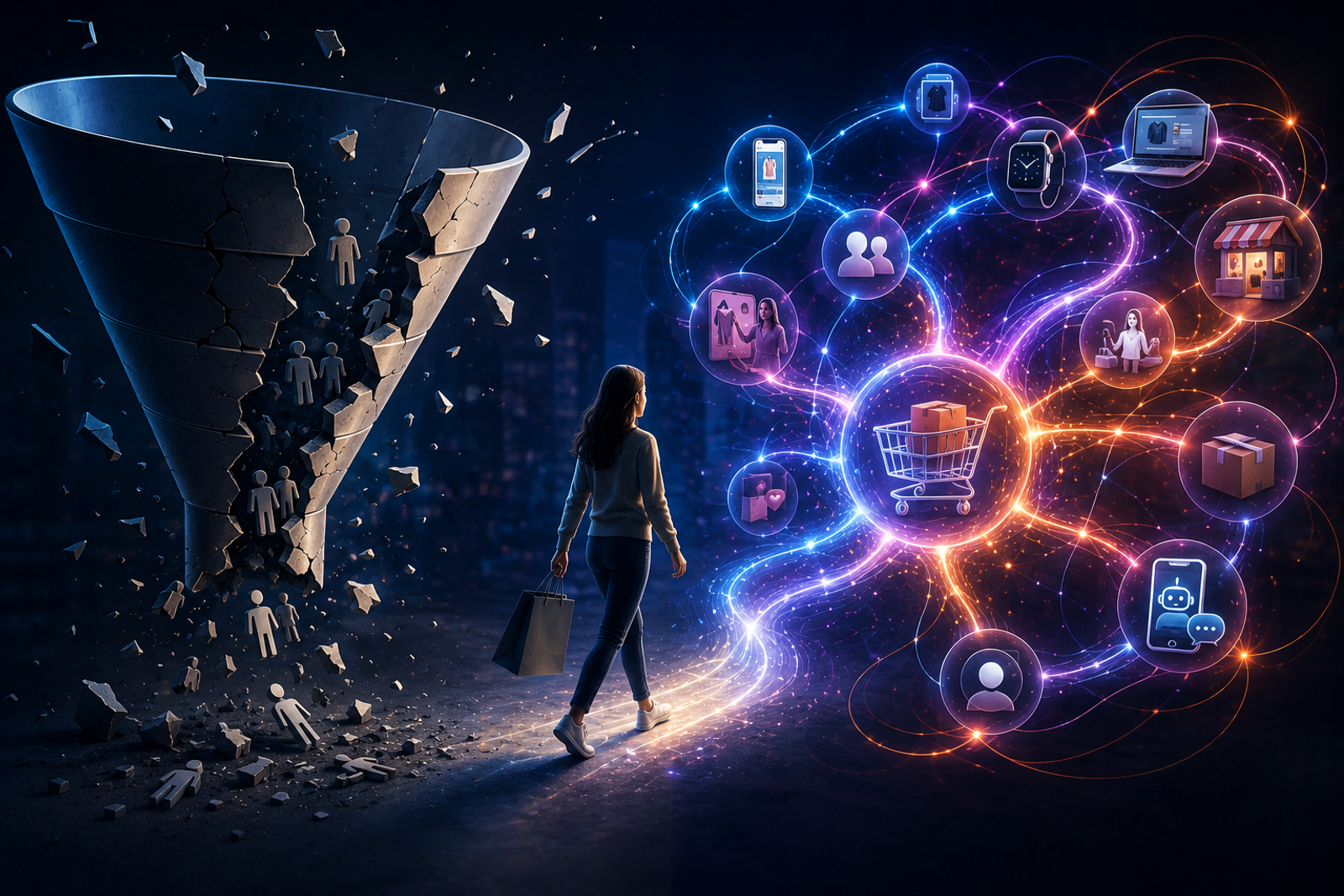
And yet, conversion rates barely move. Not because your funnel is broken. But because customers no longer behave like a funnel at all. The old journey—Awareness → Consideration → Purchase—used to make sense when shopping was predictable. It isn’t anymore.
Today’s customer journey is messy, fast, fragmented, and heavily influenced by AI. A customer might:
- Discover your product on Instagram
- Research it through ChatGPT or Perplexity
- Watch a creator review on TikTok
- Compare alternatives on Google
- Then buy through an AI-powered recommendation
All without ever following the “traditional path” marketers were taught to optimize. That’s the real shift happening in e-commerce right now.
The Funnel Didn’t Fail. Consumer Behavior Changed.
In 2026, consumers don’t browse patiently anymore. They decide quickly. And they expect relevance instantly. The moment an experience feels disconnected, generic, or slow—they leave. Not because they lost interest.
Because something interrupted their momentum. This is why so many brands experience stable traffic but stagnant growth. The issue isn’t acquisition anymore. It’s the inability to guide customers through a modern buying journey.
From Funnels to Influence Maps
The smartest brands are no longer thinking in terms of “funnels.” They’re thinking in terms of influence. Because customers now move across multiple touchpoints simultaneously:
- Social media
- AI assistants
- Reviews
- Communities
- Creator content
- Search engines
- Marketplaces
Every interaction shapes the decision. This is what modern commerce really looks like: Not a straight line. A constantly shifting web of influence. And brands that fail to appear naturally within these moments become invisible.
The Real Problem: The Conversion Chasm
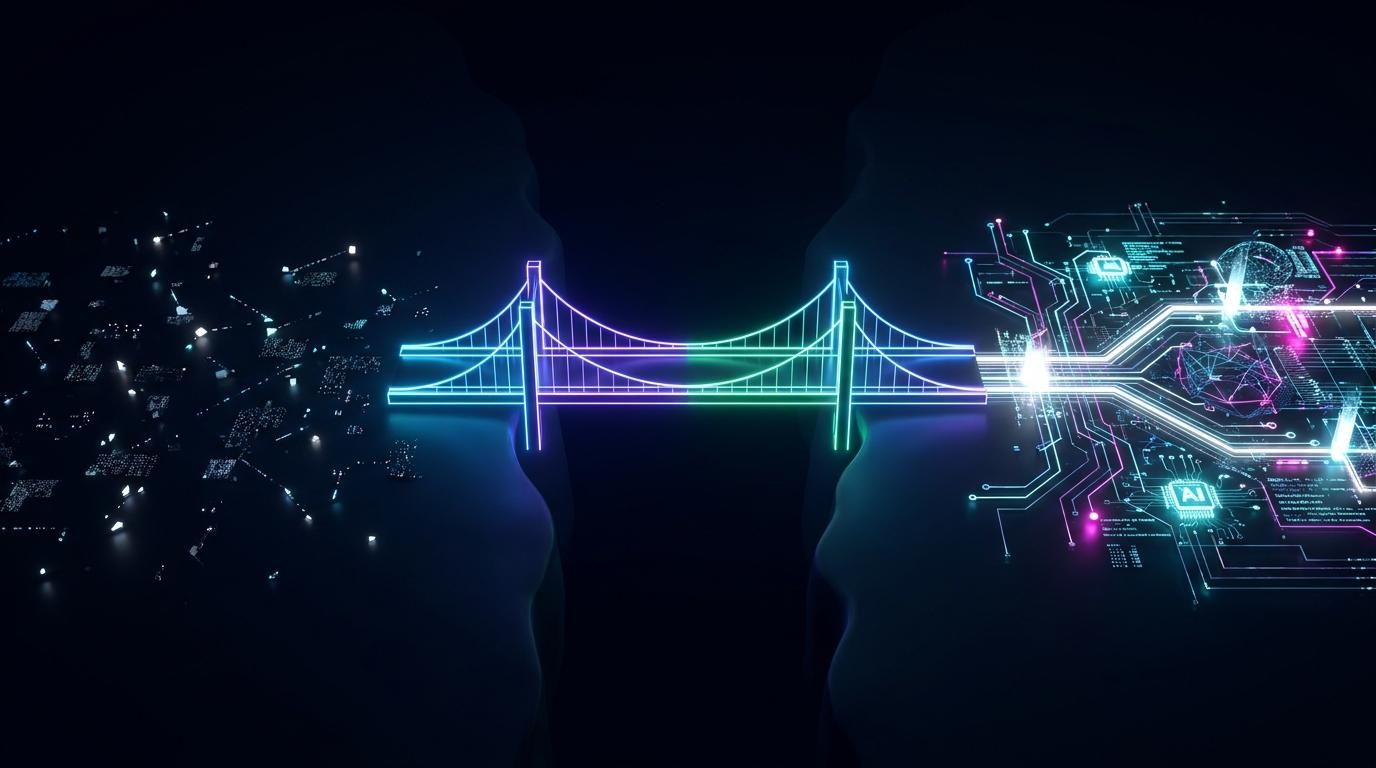
Here’s where most brands lose customers: A high-intent shopper clicks an ad… And lands in an experience that feels completely disconnected from their intent. The ad promised relevance. The website delivered a generic page. That gap creates friction. And friction destroys conversions. This growing disconnect between discovery and purchase is what we call the Conversion Chasm.
And in 2026, it’s getting wider.
The Acquisition Crisis Is Making It Worse
Customer acquisition is becoming significantly more expensive every year. Privacy-first ecosystems, declining cookie data, and platform competition have changed the economics of growth. Brands are now paying more just to get attention. Which means wasting high-intent traffic is more expensive than ever before. At the same time, users are increasingly relying on AI-generated answers instead of traditional browsing.
People don’t want ten links anymore. They want the best answer immediately. That shift is quietly reshaping visibility online.
Why AEO Is Becoming More Important Than SEO
Traditional SEO focused on rankings. But in 2026, visibility increasingly depends on whether AI systems choose your brand as part of the answer. This is where Answer Engine Optimization (AEO) comes in. Platforms like ChatGPT, Gemini, and Perplexity are changing how customers discover products. Instead of searching manually, users ask conversational questions:
- “Best skincare for sensitive skin?”
- “What running shoes are best for flat feet?”
- “Best protein snacks under ₹500?”
And AI decides what gets recommended. If your brand isn’t structured for AI visibility, you risk disappearing before customers even enter your funnel.
Static Websites Can’t Handle Dynamic Intent
Most Shopify stores are still built like digital catalogs. Static layouts. Fixed journeys. Same experience for every visitor. But customer intent changes constantly. Someone arriving from a TikTok creator video behaves differently from someone arriving through a Google search. Yet brands often show them the exact same experience.
That’s where the leak happens.
The Rise of AI Storefront Engines
The next generation of e-commerce isn’t static. It’s adaptive. AI storefront engines can:
- Personalize landing pages instantly
- Change messaging based on user intent
- Recommend products dynamically
- Reduce decision fatigue in real time
Instead of forcing users through a rigid funnel, the experience adapts around them. It feels less like browsing a website… And more like being guided by a smart shopping assistant. And the difference in conversion rates is massive. Because customers don’t want more options anymore. They want faster decisions.
Speed Is No Longer a Technical Metric. It’s a Revenue Metric.
Modern commerce happens inside tiny attention windows. If users don’t immediately feel relevance, they leave. A delay of even a second on mobile can destroy momentum. That’s why brands obsessing over aesthetics while ignoring performance are losing conversions quietly every day. Fast experiences win because they reduce friction. And reduced friction creates trust.
Personalization Is Becoming the Default Expectation
Customers no longer see personalization as a bonus. They expect it. They expect brands to understand:
- What they’re looking for
- Why they clicked
- What stage of decision-making they’re in
Generic experiences now feel outdated. The brands growing fastest in 2026 are the ones creating dynamic storefronts that adapt in real time.
The Bottom Line
Your funnel isn’t broken because customers stopped converting. It’s broken because customers stopped behaving linearly. The old e-commerce playbook assumed buyers would move step-by-step. Today’s buyers move fluidly across platforms, conversations, recommendations, and AI systems. And the brands that continue optimizing for yesterday’s behavior will slowly lose visibility, conversions, and loyalty.
The Future Belongs to Adaptive Commerce
The next era of e-commerce won’t be powered by static websites. It will be powered by intelligent systems that:
- Understand intent instantly
- Adapt experiences dynamically
- Reduce friction automatically
- Guide decisions conversationally
Because in 2026, growth doesn’t come from pushing more traffic into a funnel. It comes from building journeys customers actually want to move through.
Ready to Bridge the Conversion Chasm?
Transform your customer journey with IntelliAssist’s AI-driven architecture.
Share this article
Help others discover this content