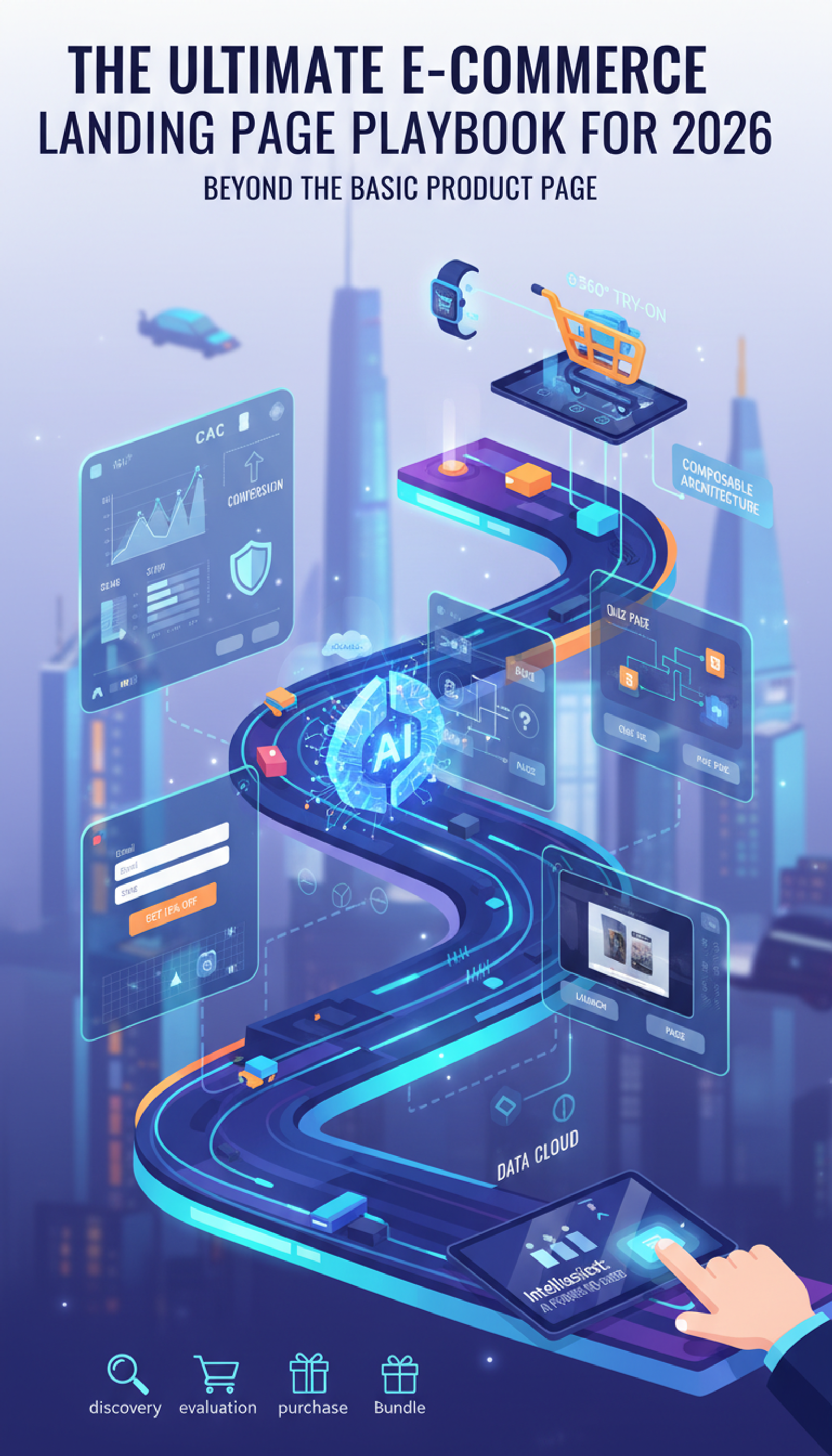

The Ultimate E-commerce Landing Page Playbook for 2026: Beyond the Basic Product Page
Discover how specialized landing pages, powered by AI, are revolutionizing customer acquisition and conversion in the competitive e-commerce landscape.
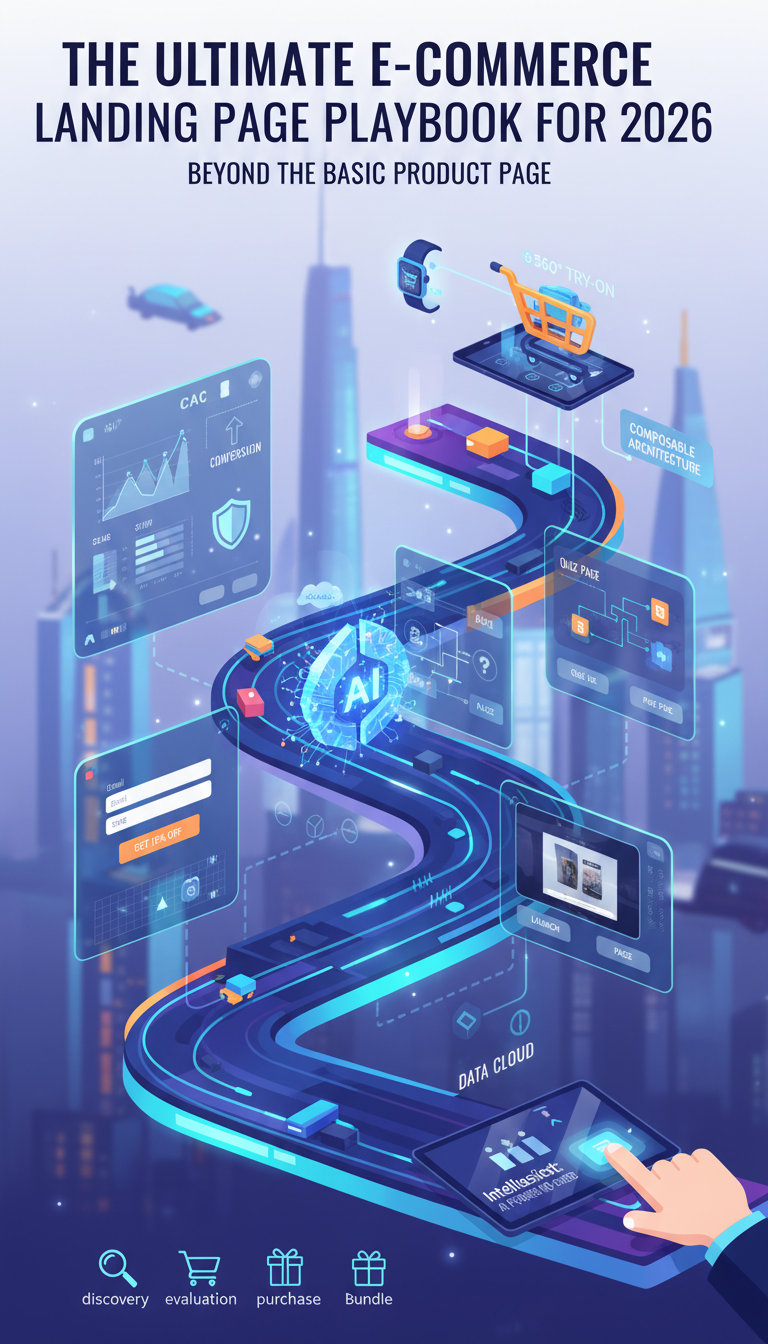
Introduction: The Evolving E-commerce Landscape and the Need for Specialized Landing Pages
The e-commerce environment in 2026 is characterized by escalating customer acquisition costs, fluctuating privacy regulations, and intense competition. A singular, generic product page is insufficient for marketing campaigns. The solution lies in specialized landing pages, designed for specific objectives like discovery, evaluation, purchase, and repeat business. The future involves AI-powered, no-code landing pages that adapt to unique campaigns and customer segments without requiring coding expertise.
Defining Landing Pages vs. Homepages
- Landing Page: A dedicated, focused web page designed for a single goal (e.g., opt-in, click-through, sale). It is typically linked to a specific traffic source (ad campaign, email blast, social media post).
- Homepage: A general directory or introduction to a website, attempting to cater to a broad audience.
- Key Difference: Landing pages minimize distractions to drive a specific action, while homepages aim to provide a broader overview.
Evolution of Landing Pages
- 1990s-Early 2000s (Early Wild West): Rudimentary online catalogs with basic images, text-heavy content, and clunky forms. The primary challenge was building trust for online purchases.
- 2000s-Early 2010s (Growing Pains & Purpose): Focus shifted to conversions. Pages incorporated security badges, clearer return policies, and early personalization. The goal was to convert clicks into sales.
- Mid-2010s-Present (The Mobile Tsunami): Mobile-first design became essential, prioritizing speed, intuitive navigation, and touch-friendly interfaces. "Omnichannel" became a key concept for cross-device engagement.
- Late 2010s-Present (The AI Revolution): Era of hyper-personalization driven by AI, featuring AI-driven recommendations, rich visual experiences (videos, 3D models), and seamless user experiences. Pages evolved from static to dynamic, intelligent selling machines.
Seven Essential Landing Page Types for E-commerce in 2026
1. Lead Generation Landing Pages
Purpose: Capture contact details (email, SMS, WhatsApp, first-party data) in exchange for a compelling offer.
Importance: Mitigates rising advertising costs by building an owned audience for remarketing and reducing reliance on paid channels.
Examples: Offers like "15% off first order + personalized recommendations," early access lists, waitlists, downloadable style guides.
2. Click-Through Landing Pages
Purpose: Act as a "bridge" page in paid media funnels to warm up visitors before reaching a product page or checkout. Builds value and reduces friction.
Importance: Essential for complex products (subscriptions, routines, bundles) to pre-educate visitors, align messaging with ads, reduce bounce rates, and minimize returns.
Examples: A page detailing a skincare routine after a social media ad highlights a problem, leading to a "See my kit" CTA to a pre-configured cart.
3. Pre-Sell Landing Pages
Purpose: Editorial-style pages mimicking articles or reviews to subtly introduce a problem and position a product as the solution.
Importance: Ideal for native advertising and top-of-funnel campaigns to build trust, address objections, and educate prospects without aggressive sales tactics. Effective for health, beauty, and supplement categories.
Examples: A blog post titled "How I finally fixed my sleepless nights" with embedded testimonials and a "Try it risk-free" CTA for a sleep supplement.
4. Quiz Landing Pages
Purpose: Interactive pages where users answer questions for personalized product recommendations or customized content. The quiz serves as the lead magnet.
Importance: Transforms anonymous visitors into rich data profiles (hair type, skin concerns, dietary preferences) for hyper-personalization, reduced choice overload, and fewer returns.
Examples: "Find your perfect shade" for makeup, "Build your dog's meal plan" for pet food, leading to specific product recommendations and discounts.
Intelliassist Advantage: AI can automatically generate quiz funnels and dynamic result pages without coding.
5. Product Launch Landing Pages
Purpose: Dedicated pages for new products or exclusive collections to generate buzz, capture early interest, and drive initial sales.
Importance: Standard templates are insufficient for launch excitement. These pages offer control over storytelling, scarcity tactics, urgency (limited drops, pre-orders, waitlists), and serve as a central hub for launch traffic.
Examples: "Just Dropped: The Ultra-Boost Sneakers!" page with hero video, benefits, influencer proof, early-bird pricing, and a "Pre-order Now" CTA.
6. Bundle and Offer Landing Pages
Purpose: Pages built around curated product sets (starter kits, routines, bundles, subscriptions).
Importance: Boost average order value (AOV), lock customers into broader product experiences, and simplify purchasing for campaigns and offers.
Examples: "Build your complete hair repair routine" with pre-configured sets and upgrade options.
Intelliassist Advantage: AI can automatically generate variant and upsell sections based on customer history or quiz data.
7. Post-Purchase and Thank-You Landing Pages
Purpose: Pages displayed after a purchase, often overlooked but crucial for revenue generation and retention.
Importance: Used for one-click upsells, cross-sells, loyalty program invitations, educational content (reducing support tickets/returns), and gathering zero-party data (surveys, NPS) when customer motivation is high.
Examples: "Thanks, your order is on its way!" page with an offer for "Complete your set with 20% off right now" or a prompt to take a personalization quiz.
Ethical Considerations for Landing Pages
- Dark Patterns: Avoid manipulative tactics like hidden costs, forced continuity (auto-renewals), false urgency, and confirm shaming, which erode trust and can lead to legal issues.
- Privacy Concerns: Transparent privacy policies and explicit consent are mandatory due to regulations like GDPR and CCPA, especially as landing pages are primary data collection points.
- Misleading Marketing: Exaggerated claims, fabricated reviews, and ambiguous return policies damage reputation and customer loyalty. Honesty and transparency are key.
The Future of Landing Pages: AI, Immersive Experiences, and Beyond
- Hyper-Personalization (AI): AI will dynamically adjust content, product visibility, layout, and pricing in real-time based on individual behavior, history, location, and time of day, acting like a personal shopper.
- Conversational Commerce & AI Assistants: Customers will interact with AI assistants on landing pages for questions, recommendations, and purchases within a single conversation ("chat-to-checkout").
- Headless & Composable Commerce: Decouples front-end from back-end for fast, flexible, and scalable landing page creation, enabling rapid experimentation and consistent cross-channel experiences.
- Immersive Experiences (AR/VR): Virtual try-ons, 3D product views, and interactive demos will increase confidence and conversions by allowing customers to "experience" products.
- Visual-First & Interactive Design: Looping product videos, 360-degree spins, and micro-interactions will tell stories and recreate an "in-store" feel, reducing reliance on text.
- No-Code Solutions as AI Co-Creators: AI will generate page foundations, copy, and optimize layouts from simple prompts, making sophisticated landing page creation accessible.
Choosing Landing Page Strategies and the Intelliassist Advantage
- Prospecting Ads (Cold Traffic): Utilize lead generation, quiz, pre-sell, and click-through pages to educate, build trust, and segment new visitors.
- Retargeting & Email (Warm Traffic): Employ bundle, product launch, and post-purchase pages for tailored offers, addressing objections, and fostering repeat business.
- Intelliassist Advantage: AI-first builders like Intelliassist enable rapid creation and A/B testing of all landing page types without developer reliance or theme constraints, allowing marketers to adapt and optimize based on real-time data.
Conclusion: The Path to E-commerce Success in 2026
The 2026 e-commerce landscape requires a diverse portfolio of strategically designed landing pages. Understanding each type's role in the customer journey can improve conversions, strengthen customer relationships, and unlock new revenue streams. The future of e-commerce is personalized, powerful, and accessible through AI-assisted tools that allow for cloning proven templates and adapting content and layouts for specific campaigns.
Share this article
Help others discover this content