
The Illusion of Traffic: Decoding the Secret Sauce of Smarter Commerce
1. The Siren Song of Acquisition and the "More Traffic" Trap
In the modern theater of e-commerce, we have long been seduced by a single, dangerous metric: volume. We operate under the pervasive assumption that the answer to scaling a business is simply pouring more human attention into the top of the funnel. But in an ecosystem where the average Customer Acquisition Cost (CAC) has ballooned to a staggering $78, this pursuit of infinite breadth is mathematically flawed. The true frontier of growth is not acquiring new visitors; it is deepening the engagement of the ones who have already crossed your digital threshold.
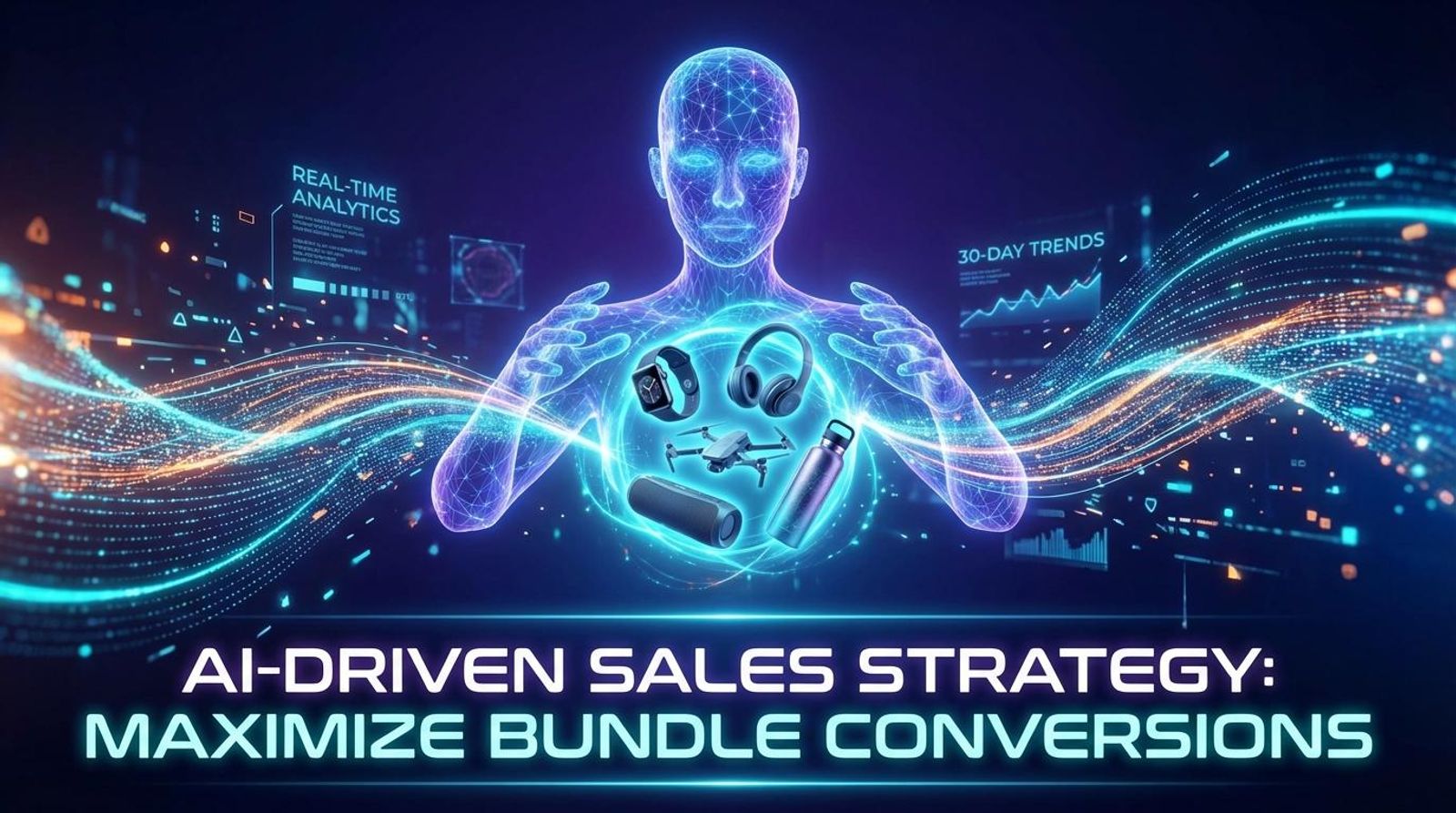
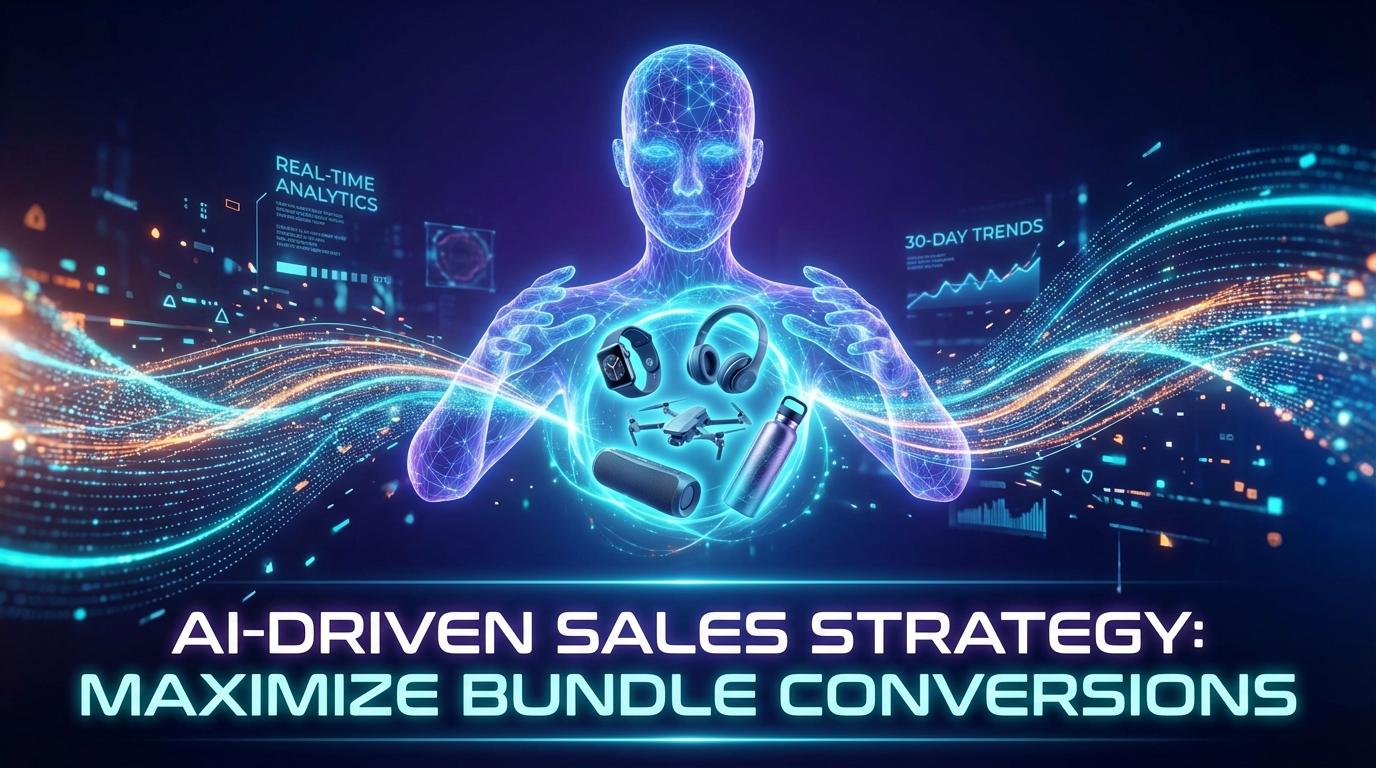
Enter the Bundling Agent. Think of it less as a software tool and more as a tireless, algorithmic personal shopper. Unlike traditional systems that rely on long-term historical averages—which are essentially irrelevant in a fast-moving market—the Bundling Agent operates on the rolling reality of the last 30 days of order history. Why 30 days? Because yesterday's viral trend is tomorrow's surplus inventory. By analyzing real-time purchasing patterns and collection data, this agent dynamically curates products that resonate right now.
The underlying mathematics are elegant: by increasing the value of every paid click, the Bundling Agent fundamentally dilutes that nightmarish $78 CAC. It kicks Return on Ad Spend (ROAS) into high gear and accelerates Long-Term Value (LTV) by introducing consumers to a wider spectrum of the catalog during their very first transaction.
2. The Evolution of Curation: A Brief History of the Upsell
To truly understand the sophistication of the modern agent, we must look backward. The history of product bundling is a fascinating timeline of human intuition slowly giving way to computational precision.
- The Dark Ages (1995–2005): In the early era of digital storefronts, curation was a labor-intensive endeavor rooted in merchant "gut instinct." Hard-coded bundles were created as unique SKUs under the hopeful assumption that someone buying a digital camera might also want a carrying case. It was manual, rigid, and fraught with inventory risks.
- The "Amazon" Era (2005–2015): The introduction of collaborative filtering brought us the famous "Users who bought X also bought Y" paradigm. While this data-driven association was a leap forward, it often felt like steering a ship by looking exclusively in the rearview mirror. Recommendations were static and frequently absurd—suggesting items the user had just purchased days prior.
- The Agent Age (Today): We have moved beyond static rules into the realm of real-time machine learning. Today’s agents are autonomous. They require no manual updates; they prioritize recent patterns and sync with real-time inventory to curate pairings that pivot as rapidly as consumer desire itself.
3. The Modern Zeitgeist: Depth Over Breadth
Growth experts are currently navigating a profound paradigm shift. We are realizing that Average Order Value (AOV) is the new traffic. As the pursuit of new clicks reaches a point of diminishing returns, maximizing the cart is recognized as the only sustainable strategy to breach the $1M–$10M GMV "scaling wall."
Simultaneously, we are witnessing the death of third-party cookies. In this new privacy-first reality, First-Party Data is king. A brand's most vital asset is no longer what an advertising giant knows about a consumer, but what the brand itself knows through its own 30-day order history.
Crucially, the prevailing methodology has shifted from broad 1:1 personalization toward intent-based dynamic grouping. We call this "Intelligent Injection." It is not the vulgar practice of screaming "BUY MORE" through pop-ups on every page. Rather, it is the quiet, contextual placement of bundles at exact moments of high intent, minimizing friction and offering utility just as the customer is prepared to commit.
4. The Architecture of Friction: Controversies and Drama
Yet, to pretend this technological leap is without its shadows would be intellectually dishonest. The implementation of AI-driven bundling introduces several complex frictions.
First, we must navigate the Personalization Paradox. There is a fine, often unsettling line between a customer thinking, "Wow, I needed that!" and "How did they know I needed that?" As algorithms peer deeper into our behaviors, brands must balance the demand for relevance with tightening global privacy regulations like GDPR and CCPA.
Psychologically, there is the Paradox of Choice. The intent of bundling is to reduce cognitive load, but aggressive or irrelevant suggestions can easily trigger choice paralysis. Overwhelm a buyer, and they will flee—exacerbating an industry-standard cart abandonment rate that stubbornly hovers around 70%.
Furthermore, as agents become increasingly autonomous, merchants are grappling with the "black box" problem. The AI may uncover highly profitable product pairings, but it denies human operators the "Why." This lack of algorithmic transparency complicates inventory planning and cohesive brand messaging. And pragmatically, there remains the risk of mobile UI/UX friction, where "intelligent injection" devolves into a clumsy widget that shatters the fragile flow of shopping on a smaller screen.
5. The Predictive Horizon: Gazing into the Crystal Ball
Where does this trajectory lead us as we look toward 2025 and beyond? The next frontier is predictive autonomy.
We will soon see systems transition from reacting to what was bought to anticipating what will be needed. Imagine a Predictive AI that calculates your specific consumption cadence, seamlessly offering a bundle because it knows you are about to run out of coffee before you even notice the bag is empty.
We will also witness the rise of "Lifestyle Bundles" that dissolve the walled gardens of single stores. A purchase of a yoga mat on one platform might trigger a dynamically priced offer for a green juice subscription from a partner brand, reflecting a holistic view of the consumer’s multi-channel identity.
Ultimately, Generative AI will usher in an era of hyper-personalized everything. Bundles will cease to be predefined altogether; instead, unique, one-to-one kits will be built in real-time. Everything from the pricing to the actual creative marketing assets will be dynamically generated based on a single user's zero-party data and browsing depth.
6. Closing Thoughts: The Verdict on Scaling
In the end, the dialogue surrounding e-commerce growth must mature. We must stop leaving money on the table in a blind, expensive pursuit of top-of-funnel volume.
If we examine the eternal, somewhat cliché debate between the creative, brand-focused "Marketing Maria" and the purely analytical, conversion-obsessed "Growth Gary," the Bundling Agent provides a rare synthesis. It respects the consumer's experience while ruthlessly optimizing the underlying math. It is not merely a tactical widget; it is a profound philosophical shift in how we approach the economics of attention. By valuing the present moment—the last 30 days of real human behavior—we finally possess a strategy capable of beating the scaling wall.
Share this article
Help others discover this content