

The Four Pillars of Effective B2B Brand Building
Moving beyond the "Look at Us!" trap to cultivate genuine connection and drive tangible business results.
Summary: The Four Pillars of Effective B2B Brand Building
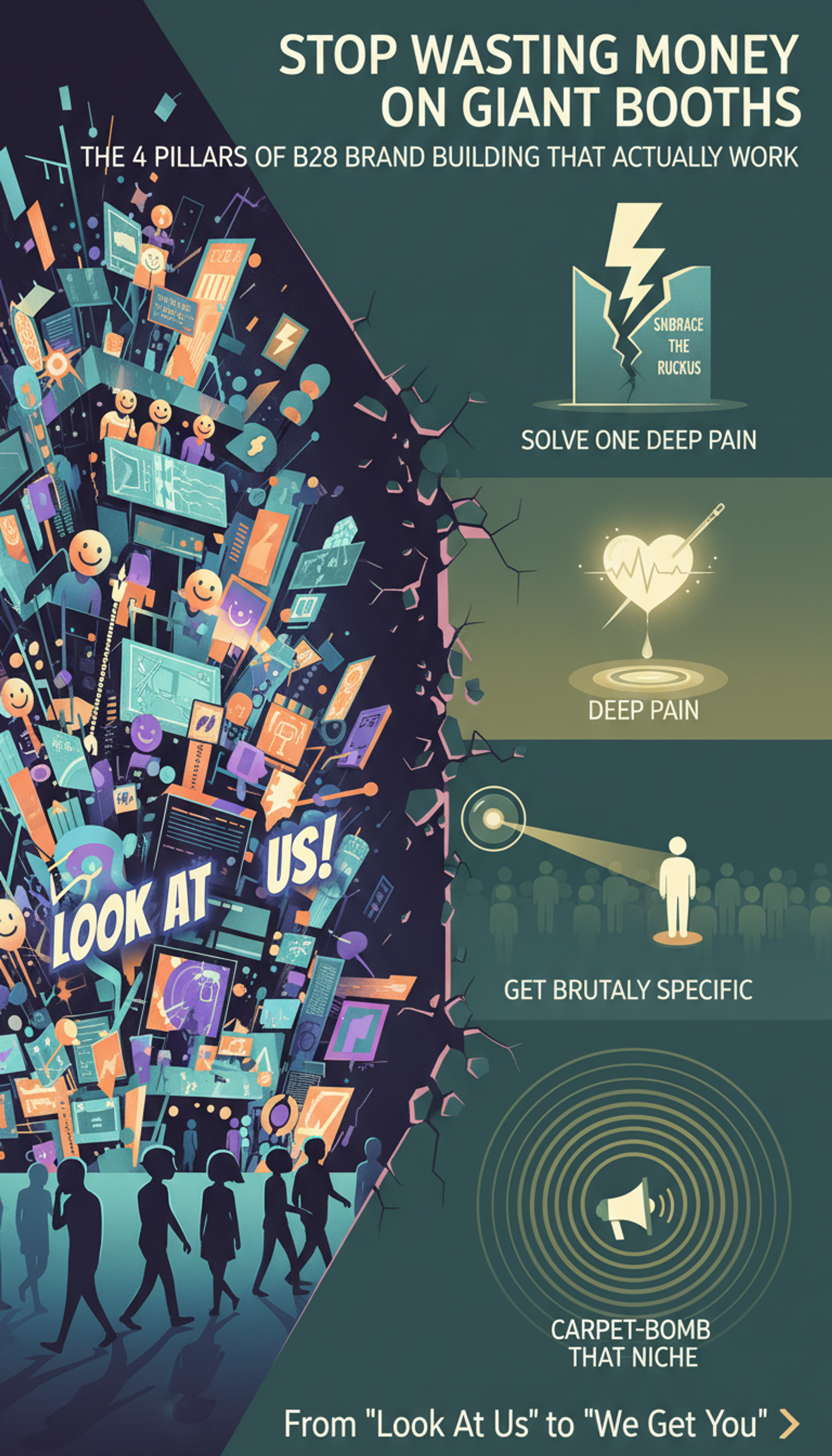
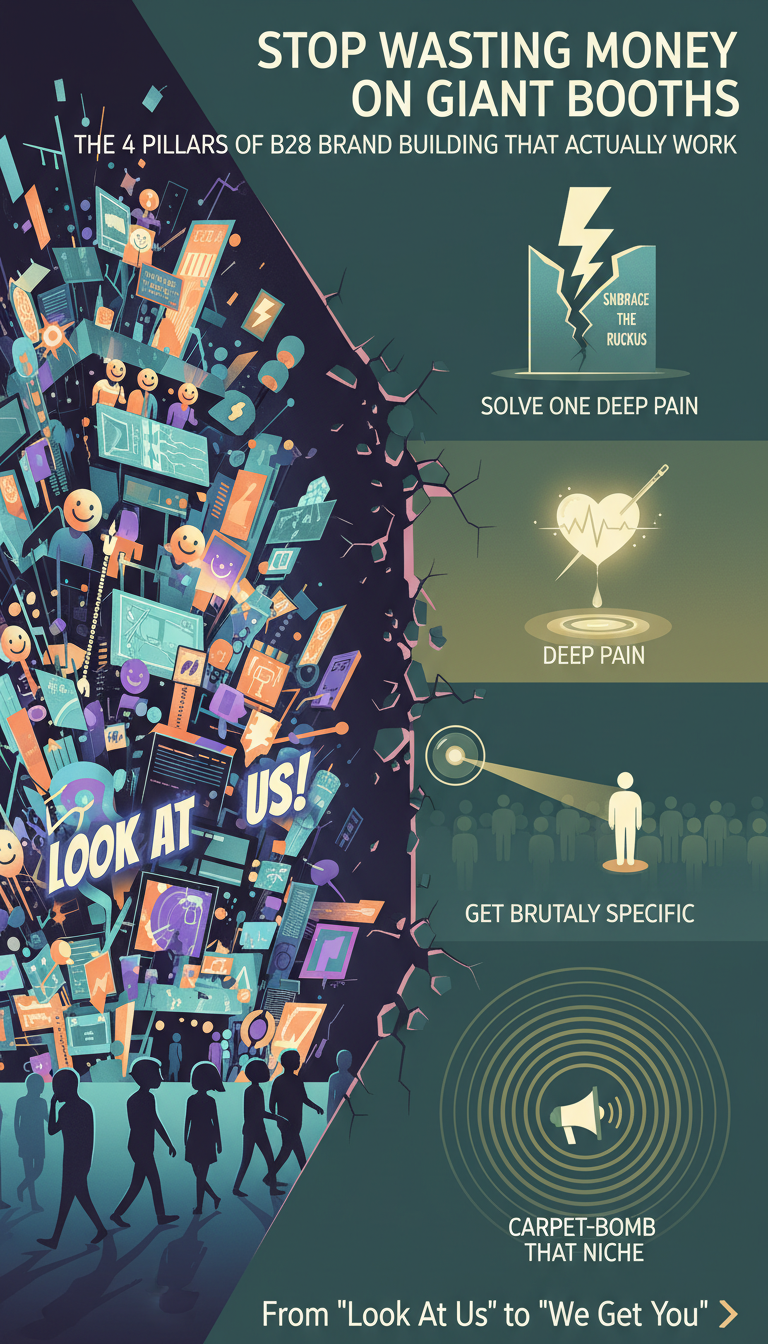
This blog post argues that traditional B2B brand building, often characterized by large, flashy trade show booths and generic awareness campaigns, is an illusion that wastes money. Instead, it proposes a shift towards a more targeted, resonant approach centered on four key pillars that foster genuine connection and drive tangible business results.
I. The Branding Illusion: Moving Beyond "Look at Us!"
Problem: Many CMOs mistake extravagant displays and "massive visibility" for effective brand building, leading to wasted marketing budgets. In a noisy marketplace, a broad shout is lost; a precisely targeted, relevant "whisper" is what truly resonates.
Objective: To explore what "real" brand building entails, why old methods are losing effectiveness, current industry debates, and future trends, moving beyond superficiality to cultivate genuine connection, loyalty, and business results.
II. The "Look at Us!" Trap: Why Generic Awareness Falls Flat
Traditional B2B Playbook: Relied on broad tactics like big events, print ads, and direct mail, aiming for maximum exposure with the assumption that more visibility equals more conversion opportunities.
Historical Context:
- 19th Century: B2B was driven by handshakes, trade journals, product catalogs, and face-to-face networking.
- Post-WWII (Mad Men Era): Companies recognized the importance of consistent logos and messages, even for business buyers, ushering in an understanding of branding's power in B2B.
Controversy: Traditional Methods (Trade Shows):
Pros:
- Still valuable for in-person networking, live demos, initial trust-building, and market trend spotting.
- The US trade show market is rebounding post-pandemic, highlighting the value of human interaction and tangible product experience.
Cons:
- Expensive, difficult to measure ROI, overwhelming environments, and booths can get lost in the noise.
- They often focus on the company ("Look at us!") rather than the customer ("This is for *you*!"). Simply being seen is insufficient; being heard is crucial.
III. The Four Pillars of "This Is For You": Real B2B Brand Building
This framework focuses on building a brand that deeply resonates with ideal customers, moving beyond visibility to cultivate understanding and a sense of problem-solving.
1.Embrace the Ruckus – A Polarizing Opinion
Definition: A strong, potentially risky point of view that challenges the status quo. If no one disagrees, it's not impactful. It involves taking a stand and declaring beliefs, even if it alienates some potential customers.
Why it Works: Makes the brand memorable and distinct. It aligns with core values, sparks conversation, ignites debate, and attracts those who share the vision.
2.Solve One Deep, Gut-Wrenching Pain
Definition: Focus on a single, acute problem that your ideal buyer *feels* intensely, rather than offering "end-to-end" or "all-in-one" solutions. Identify the specific frustration, worry, or challenge that keeps them up at night.
Why it Works: Empathy drives sales. Directly addressing a specific pain demonstrates understanding and offers a clear, targeted solution, positioning the brand as a lifeline.
3.Get Brutally Specific – A Narrow Definition of Your Buyer
Definition: Define your Ideal Customer Profile (ICP) with laser focus, going beyond broad categories like "mid-market companies" to specific firmographics, pain points, and needs.
Why it Works: Leads to higher quality leads (36% higher conversion rates), increased sales efficiency, better resource allocation (68% higher ROI for LinkedIn campaigns), and stronger loyalty. It concentrates efforts on those most likely to benefit and tailors messages effectively.
Debate: While some fear limiting market size, data suggests focus leads to better outcomes. It's a strategic trade-off of breadth for depth.
4.Carpet-Bomb That Niche – Relentless Repetition
Definition: Once the point of view, message, and audience are defined, saturate that specific niche with consistent messaging across all channels, frequently (weekly or daily).
Why it Works: Consistency builds familiarity, trust, and makes the brand the "obvious choice." It's about overwhelming a sub-segment, not broad dissemination, aiming to become synonymous with the solution to their specific problem.
IV. The Brand Battlefield: Current Opinions & Controversies
The Big Tension: Polarizing vs. Inclusive
Team "Polarizing is Powerful":
- Builds strong identity, attracts loyal fans, and differentiates.
- Includes "brand activism" – taking stands on social issues and aligning with specific values.
Team "Inclusive Wins Long-Term":
- Appeals to a broader audience, enhances reputation (DEI), fosters innovation, and builds trust with diverse decision-makers.
- It's less risky and more sustainable.
The CMO's Balancing Act:
- Humanizing B2B (H2H): Recognize that business decisions are made by people with emotions.
- Authenticity First: Whether polarizing or inclusive, the stance must be genuine. Inauthentic "woke washing" can backfire.
- Internal Alignment: Brand starts with employees; they must believe in it for customers to do so. This involves creating a culture that reflects brand values and empowering employees as brand ambassadors.
V. Crystal Ball Gazing: The Future of B2B Brand Building
- AI Takes the Wheel: Enables hyper-personalization, predictive analytics, AI as a campaign "co-pilot," and conversational AI for engagement.
- Beyond Text: Video continues to dominate; AR/VR will be used for immersive product demos and training.
- Content Evolution: Micro-content tailored to buyer journeys, B2C-inspired web design, private communities, and employee influencers building trust.
- Data-Driven Trust: Unified commerce intelligence and self-serve analytics for customers. Transparency and genuine value in return for data are paramount.
- The "Generative" Revolution: AI will algorithmically determine brand reputation based on real conversations and reviews, increasing the importance of authenticity and meaningful engagement.
- The Enduring Debate: The philosophical divide on branding's relevance in B2B will persist, but strategic, focused branding will continue to prove its worth.
VI. Conclusion: From "Look At Us" to "We Get You"
True B2B brand building is about a clear, relevant "whisper" to the right audience, not the loudest shout. It requires purpose, specificity, and relentless execution.
The goal is to move beyond visibility to cultivate understanding and solve problems that truly matter. CMOs should ask if their budget is for "us" or "them," and identify a polarizing opinion in their category that competitors avoid. Brands that thrive are those that listen closely and dare to stand for something.
Share this article
Help others discover this content