

The Anatomy of a Question: Why Intelligent FAQ Injection is the Future of Conversion Logic
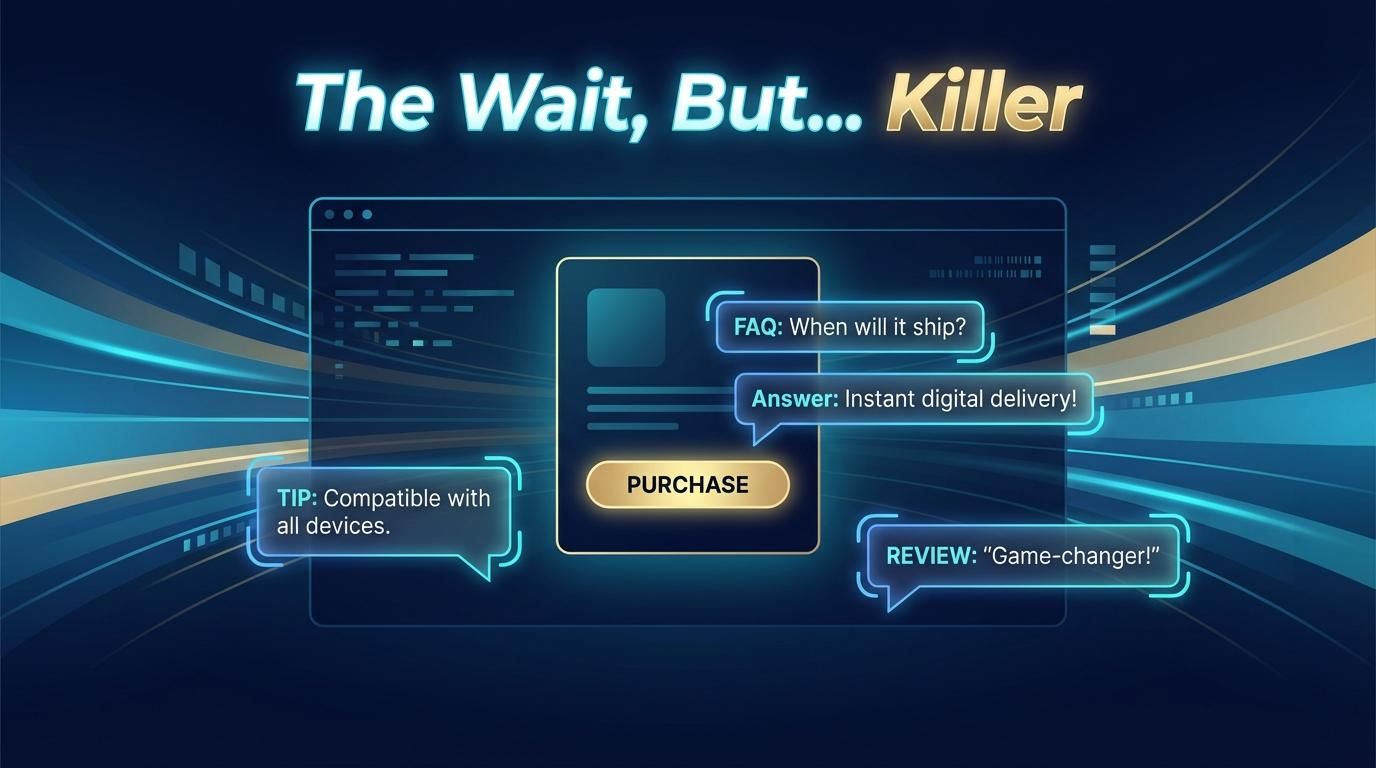
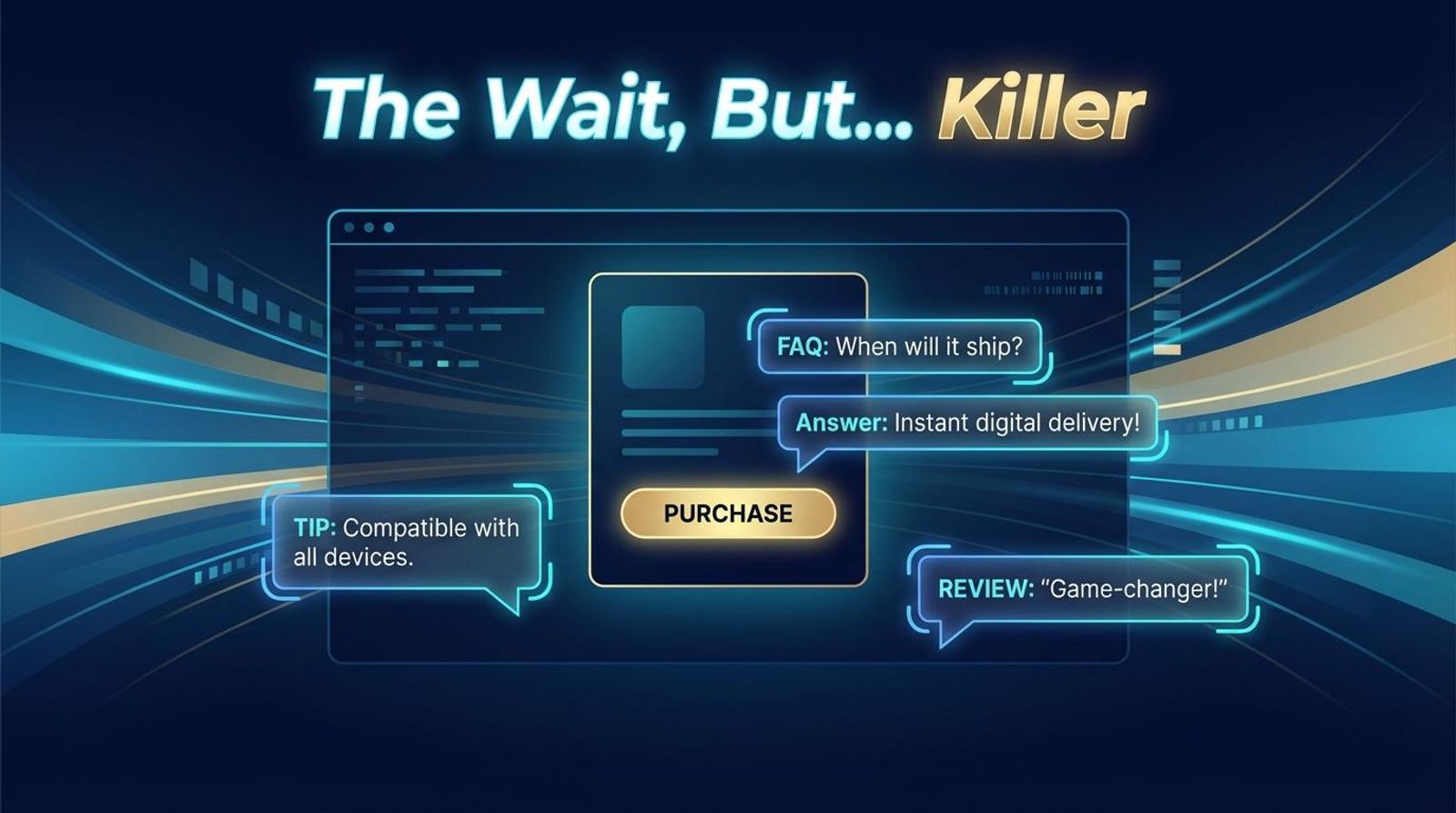
Every abandoned cart, every bounced session, and every "exit-intent" signal is essentially a tombstone for an unasked question. In the silent space between a consumer’s interest and their action lies the "Ghost in the Funnel"—that reflexive, often unconscious doubt that whispers, "Wait, but..."
"Wait, but will this fit my specific setup?" "Wait, but what if the return process is a nightmare?"
When these questions remain unanswered, the buying momentum dies. Historically, we have forced the user to do the heavy lifting, expecting them to hunt for answers in the digital equivalent of a basement filing cabinet. But a new paradigm is shifting the burden of proof from the customer to the interface. This is the era of Intelligent FAQ Injection.
From the Basement to the Sales Floor: A Historical Evolution
To understand where we are going, we must look at where we have been. The methodology of addressing customer concerns has undergone a dramatic metamorphosis:
- The Static Era (1990s–2010s): The traditional FAQ page was a centralized, long-form "wall of text." It was reactive and cumbersome, often requiring a user to leave the product page—and the conversion path—to find a single sentence of clarity.
- The Searchable Era (Mid-2010s): Knowledge bases introduced searchability, but the friction remained. The user still had to abandon their intent to seek help.
- The Static Widget (Late 2010s): Accordions brought FAQs onto the product page. This was an improvement in real estate, but it was a "one-size-fits-all" solution. Every user saw the same questions, regardless of whether they were looking at a feature list or a pricing tier.
- The Intelligent Era (Present): We are now seeing the rise of the "Sales Assistant" model. Intelligent FAQ Injection uses contextual triggers and behavioral analysis to serve the right answer at the exact millisecond friction occurs.
The Intersection of Cognitive Ease and Search Dominance
Why is this the future? Because it addresses the two most critical pillars of digital success: Conversion Rate Optimization (CRO) and Search Engine Optimization (SEO).
From a CRO perspective, the goal is "Cognitive Ease." As experts like Peep Laja have often noted, friction is the primary killer of sales. If a user has to think too hard about how to find an answer, you have already lost them. Intelligent injection acts as a virtual sales assistant, neutralizing objections before they are even fully articulated. By lingering on a pricing table, a user might trigger an injected FAQ about subscription tiers or refund policies. It is proactive, not reactive.
From an SEO perspective, this is a "double-dip" strategy. By utilizing JSON-LD Schema markup, these injected questions don't just help the user on the page; they help the brand capture "People Also Ask" (PAA) boxes and rich snippets on Google. It allows marketers to recycle customer support data into high-value marketing assets that target long-tail, conversational queries.
The Shadow Side: Technical and Ethical Pitfalls
However, the "anatomy of a question" is delicate. If handled without subtlety, injection can become intrusion.
There is the technical threat of Cumulative Layout Shift (CLS). Google’s algorithms penalize pages where content "jumps" as it loads. If an injected FAQ pushes the "Buy" button down the screen just as a user is about to click, the UX benefit is negated by technical frustration.
There is also the ethical line of "shaping" doubt. Some practitioners fall into the trap of using injected FAQs to "pre-sell" through fake objections—creating a problem just to highlight a feature. This "used car salesman" energy can erode brand trust. Furthermore, the 2023 Google updates regarding FAQ rich results serve as a reminder: the content must be genuinely helpful, not just a vehicle for keyword stuffing.
The Horizon: Predictive Intent and Generative Synthesis
The future of the question is not static; it is generative. We are moving toward a world where Large Language Models (LLMs) will scan a user’s specific session data—their referral source, their dwell time, even the specific items currently in their cart—to generate a bespoke FAQ in real-time.
Imagine a system that realizes a user in London is looking at a power tool and automatically injects a question about voltage compatibility and UK shipping times. This is "Zero-Click Conversion"—the point where the user feels so understood and their doubts so thoroughly pre-empted that the path to purchase becomes a frictionless slide.
Intelligent FAQ Injection (Live Example)
Q: Is Intelligent FAQ Injection hard to set up on my existing site? A: No. Most modern systems use a simple JavaScript snippet. Once installed, you can map questions to specific page sections or behavioral triggers without needing to rewrite your site's core code.
Q: Will injecting these FAQs slow down my page load speed? A: When implemented correctly using asynchronous loading, the impact is negligible. By serving content only when triggered by user behavior, you avoid the heavy "payload" of loading a massive static page upfront.
Q: Does Google penalize this type of injected content? A: Not if it provides value. Google’s "Helpful Content" updates target low-quality, automated text. As long as your FAQs address real user concerns and use proper Schema markup, they are a positive UX signal.
Audit Your Friction Points with Our Team, Book a Demo with IntelliAssist
#IntelliAssist #EcommerceGrowth #AIRetail #MarTech #AIPersonalization #RetailInnovation #EcommerceSEO #SmartBusiness #GrowthHacking #AI2026
Share this article
Help others discover this content