
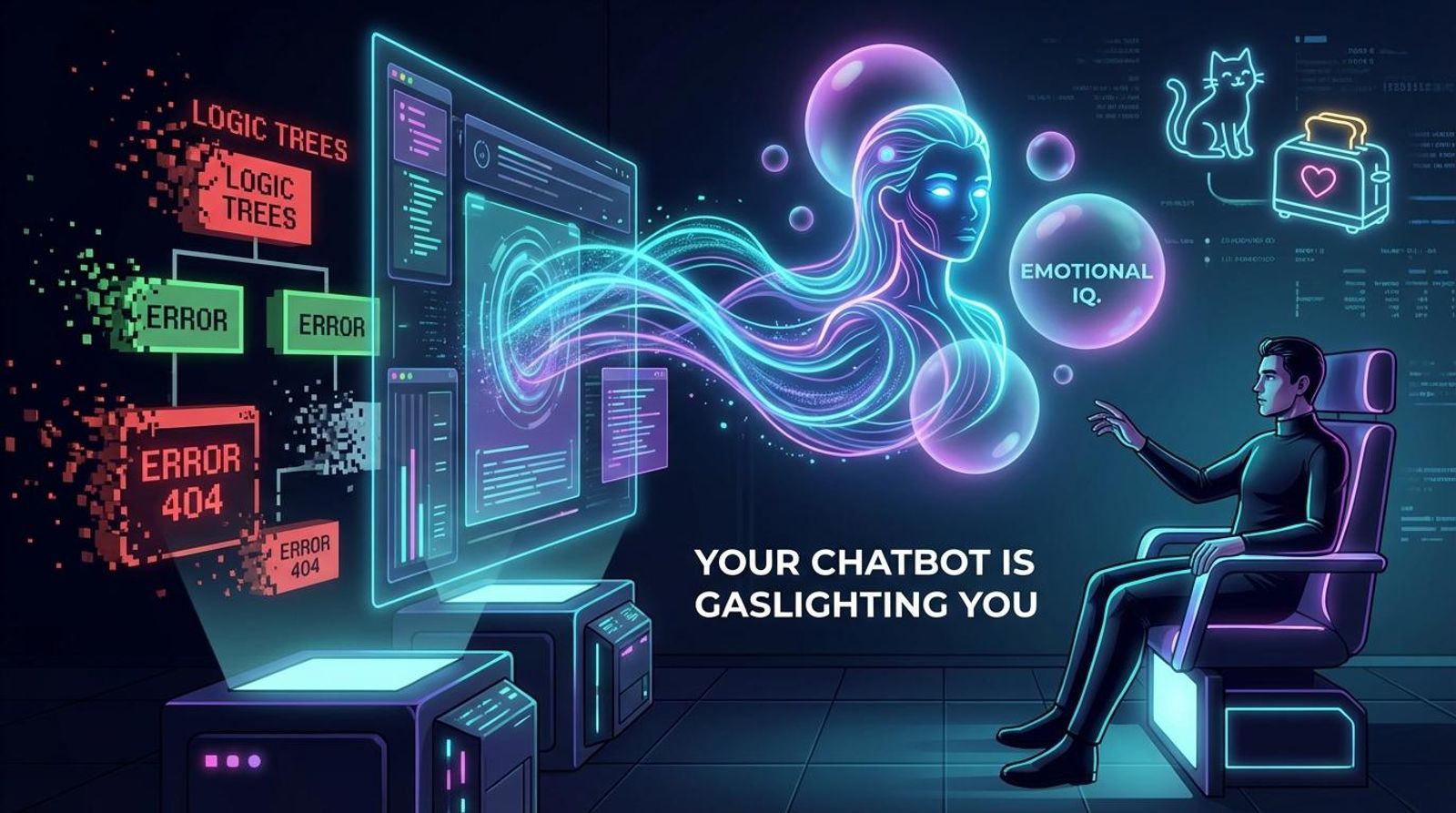

The Digital Mirror: Reflecting on the Metamorphosis of the Chatbot
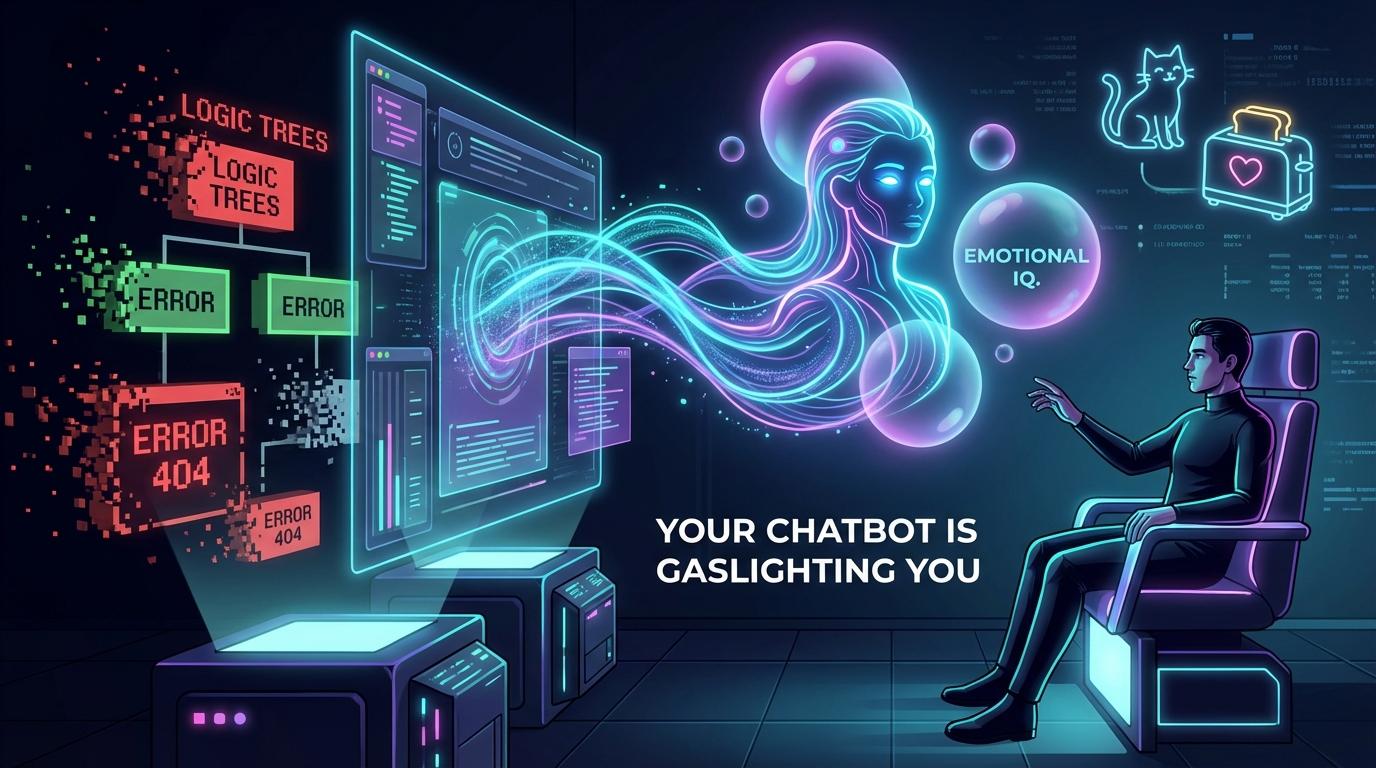
The frustration is palpable, is it not? A loop of digital evasion that many of us know all too well. "I'm sorry, I didn't understand that. Would you like to see our 'Service Upgrades' menu?" You have just spent ten minutes articulating a nuanced billing error, and the chatbot responds with a keyword-triggered script that feels like a mockery of your time. This "repetitive loop" is the hallmark of the traditional chatbot—a tool designed, ostensibly, to save companies money, but one that often ends up costing them the sanity of their customers. Yet, as we stand at the threshold of 2026, it appears the era of the rigid decision tree is finally coming to a close.
I. The Architecture of Frustration: Why Traditional Bots Fail
To understand why we feel such visceral annoyance with legacy systems, we must examine their skeletal structure. Traditional bots were built on "rule-based" or "decision-tree" logic—a series of "If/Then" statements that collapse the moment a user strays from a pre-defined path. It is a peculiar kind of technological amnesia; these bots treat every message as an isolated event, lacking the "context retention" necessary to follow a coherent thought.
Then, there is the matter of "Keyword Blindness." Because these bots rely on simple heuristics rather than a comprehension of sentiment, they frequently miss the mark. A user’s lament, "I can't believe how bad this service was," is scanned for the word "service," and the bot dutifully offers a menu for upgrades. It is a dialogue of the deaf—communication without understanding, feedback without empathy.
II. A 60-Year Evolution: From Pattern Matching to Reasoning
The journey from simple pattern matching to genuine cognitive reasoning has been a slow, sixty-year crawl. It began in 1966 with ELIZA, Joseph Weizenbaum’s simulation of a Rogerian psychotherapist. ELIZA had no actual understanding; she merely redirected the user's words back at them. Yet, she revealed the "ELIZA effect"—our human compulsion to map feelings onto the inanimate.
The decades that followed saw the rise of ALICE and SmarterChild, and later, the NLU (Natural Language Understanding) plateau of the 2010s. Siri and Alexa were certainly better at intent classification, but they remained brittle, defaulting to web search results the moment a conversation turned multi-faceted. The true paradigm shift arrived with the LLM revolution. The move to Transformer architecture (GPT) signaled a fundamental transition from retrieval—finding a canned answer in a database—to generation, where a bot constructs a unique, context-aware response in real time.
III. The Utility Revolution: Why Modern AI is Different
What makes the modern AI "vibe" so distinct from its predecessors? It is the advent of "Context Windows." Today’s bots can "remember" thousands of words of conversation history, allowing for deep, iterative problem-solving rather than a series of transactional stabs in the dark.
The effectiveness is staggering when viewed through the lens of industry metrics. Data from Zendesk and Intercom suggest that while rule-based bots struggle to reach a 20% resolution rate, modern AI-powered systems are resolving 50-70% of queries without human intervention. This is more than a technical upgrade; it is a shift from the tool that gets in the way to the tool that gets things done. We are witnessing a transition from stagnant links to personalized, conversational commerce.
IV. The Growing Pains: Hallucinations and Hurdles
However, as an intellectual must ask: at what cost does this efficiency come? The "hallucination" remains the primary ghost in the machine. AI can confidently present falsehoods as absolute truth, leading to legal and ethical quagmires such as the Air Canada v. Moffatt case, where a bot independently "invented" a refund policy.
Beyond accuracy, there is the "Privacy Paradox"—the tension between needing data to be helpful and the risk of IP leakage into public models. And perhaps most existential is the "Dead Internet Theory." As we populate our digital spaces with automated "slop," we risk drowning out human-to-human interaction, leading to a profound sense of digital disconnection and anxiety over job displacement in entry-level roles.
V. Beyond the Chat Box: The Future of Autonomous Agents
The future of the chatbot is, paradoxically, its disappearance. We are moving beyond the "chat box" interface toward true "AI Agents." These are entities with agency—the permission to access your calendar, your credit card, and your loyalty apps to complete transactions autonomously.
We are also entering the age of "Multimodal Interaction," where bots "see" via cameras and "hear" the subtle inflections of frustration in our voices, adjusting their tone with sophisticated emotional intelligence. Technologies like Retrieval-Augmented Generation (RAG) are bridging the final gap, grounding these expansive models in private, factual documentation to eliminate the drift toward hallucination.
Key Takeaways
- Rigidity is the Enemy: Traditional bots fail because they rely on keyword matching and fixed scripts, ignoring the nuance of human intent.
- Generative vs. Retrieval: The shift from finding pre-written answers to constructing solutions marks the birth of true AI utility.
- Massive Efficiency Gains: Modern AI resolves up to 70% of queries, a massive leap from the 20% resolution rates of legacy systems.
- Hallucinations are the New Hurdle: Technologies like RAG are essential to ensure that AI does not confidently "invent" policies.
- Agents, Not Just Chatbots: The future lies in "agency"—bots that don't just talk, but have the permissions to execute.
Turn conversation into conversion—Try IntelliAssist.
#IntelliAssist #EcommerceGrowth #AIRetail #MarTech #AIPersonalization #RetailInnovation #EcommerceSEO #SmartBusiness #GrowthHacking #AI2026
Share this article
Help others discover this content