
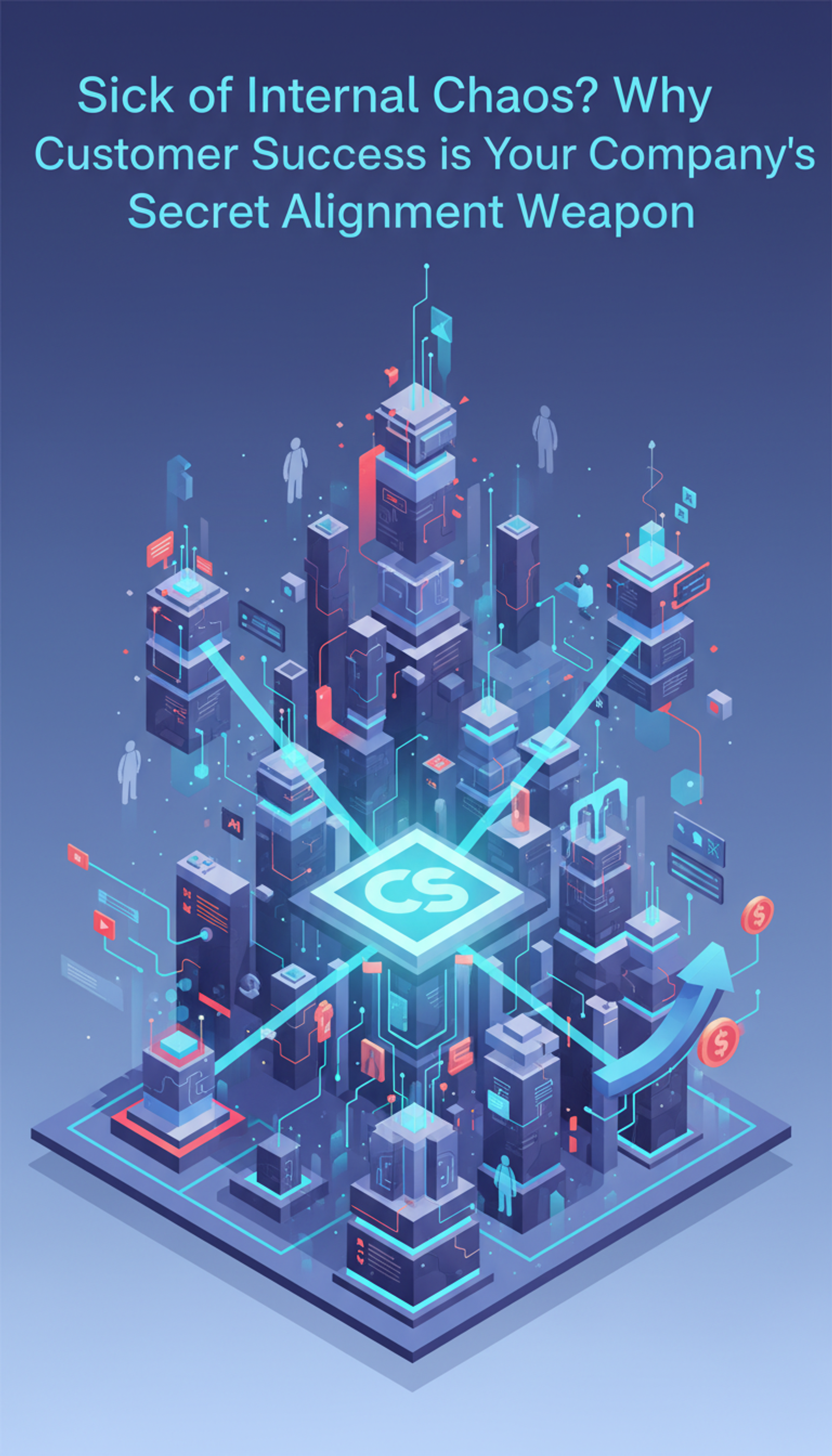

The Customer Success Superpower
Architecting Organizational Alignment in the AI Era
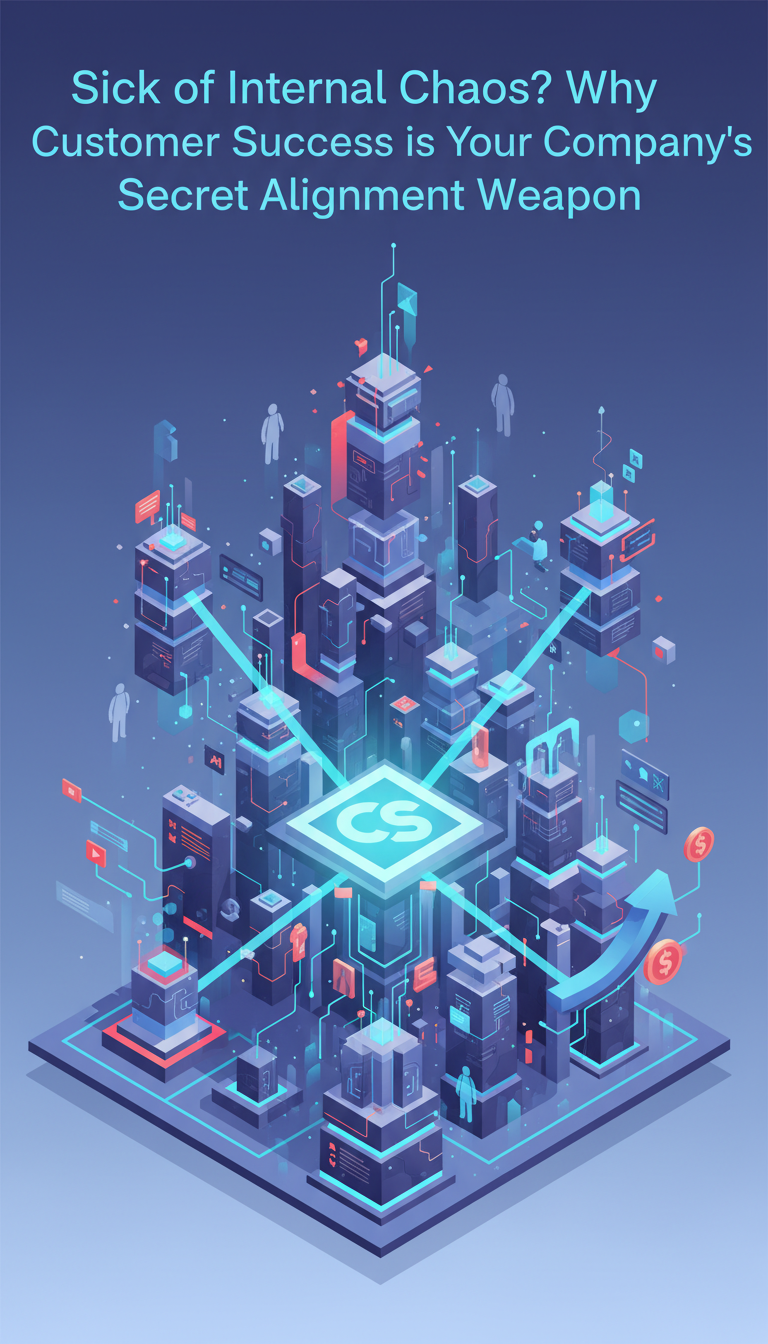
I. Introduction: The Problem of Internal Misalignment and the Role of Customer Success
Internal misalignment, where departments operate with competing priorities and conflicting goals, is identified as a significant impediment to company growth, negatively impacting the bottom line and customer satisfaction. The article posits that Customer Success (CS) is uniquely positioned to act as a unifying force, driving organizational alignment. CS is defined not merely as customer happiness or churn reduction, but as a proactive, relationship-focused strategy aimed at ensuring customers achieve their desired outcomes, which in turn leads to sustainable, long-term company profitability. This creates a virtuous cycle dependent on alignment.
II. The Customer Success Superpower: A Unique Vantage Point
Customer Success is described as the "central nervous system" of an organization, directly connected to the customer's reality. CS teams are on the front lines, gathering real-time information on:
- Sales promises and potential breaches.
- Product gaps and opportunities not visible to internal teams.
- Customer realities, daily challenges, and aspirations, highlighting the gap between their current state and desired future state.
- Early indicators of revenue risk and churn, as well as potential growth and expansion opportunities.
This unique perspective is crucial because company inefficiencies "leak towards the customer," manifesting as disjointed and frustrating customer experiences. CS teams are the first to identify these systemic problems. This vantage point comes with a responsibility for CS leaders to proactively architect alignment, treating misalignment as a leadership challenge rather than a mere communication issue.
III. Historical Evolution of Customer Success
The concept of Customer Success originated in the mid-1990s to early 2000s with companies like Vantive and Salesforce, focusing on "Customers For Life." Initially, CS was largely reactive, centered on firefighting and ensuring basic product usage, with a primary focus on retention.
The rise of SaaS in the mid-2000s to 2010s shifted power to customers, who could easily churn if they didn't perceive ongoing value. This necessitated a strategic evolution of CS from simply "retaining" customers to proactively "ensuring outcomes." This shift demanded deeper collaboration with Product, Sales, and Marketing to drive adoption, reduce churn, and influence strategic direction.
By the 2020s, CS has transformed from a cost center to a key revenue driver, responsible for protecting and growing the existing customer base. In this current landscape, cross-functional alignment is an indispensable strategic imperative for sustainable growth.
IV. Challenges to Achieving Alignment Driven by Customer Success
Despite the theoretical agreement on CS's role in unifying an organization, achieving company-wide alignment driven by CS faces several hurdles:
- Ambiguity of CS Scope: Persistent confusion exists regarding the exact definition and strategic value of CS, often misperceived as a glorified support function or cost center.
- The "Not My Job" Trap: Other departments may abdicate customer accountability to CS, leading to Sales focusing solely on closing deals and Product building in isolation, leaving CS to manage the fallout.
- Customer Success Manager (CSM) Overload: CSMs are often tasked with juggling support, sales, and strategic advising, leading to burnout and diluted strategic impact.
- Departmental Silos: Isolated operations with separate systems and conflicting priorities result in fragmented communication, disjointed customer experiences, and missed opportunities.
- Sales vs. CS Misalignment: Misaligned incentives can lead to sales overpromising and CS managing unmet expectations, driven by a mindset where sales responsibility ends at deal closure.
- Product vs. CS Disconnect: Product teams may resist customer feedback from CS, prioritizing long-term strategy over immediate customer needs, creating a product-customer disconnect.
- The Reactive Rut: CS teams can become stuck in a cycle of "saving" customers from churn rather than proactively guiding them toward long-term success.
V. Becoming the Alignment Architect: Proactive Strategies for CS Leaders
Customer Success leaders are urged to be proactive and bold in architecting alignment, rather than waiting for it to occur. The recommended CS Playbook for Alignment includes:
- Proactive Engagement: Actively participate in product roadmap, sales strategy, and marketing meetings, armed with customer data and insights.
- Business-Oriented Communication: Translate customer feedback into actionable strategies that influence Product, Sales, and company-wide decisions, demonstrating how customer retention impacts Finance and the value of customer advocacy for Marketing.
- Connective Tissue Role: Focus on building bridges between departments to prevent fire drills, reduce escalations, and minimize churn, rather than solely acting as a "cleanup crew."
- Bold Leadership: Challenge assumptions, ask direct questions, and push teams toward clarity, requiring courage and leadership.
Company-wide best practices for fostering alignment include implementing unified customer journeys, establishing shared Key Performance Indicators (KPIs) like Net Revenue Retention, fostering regular cross-functional communication, standardizing handoff processes, providing comprehensive training, leveraging data, and championing a customer-centric culture from the top down.
VI. The AI Revolution: Future-Proofing Customer Success Alignment
Artificial Intelligence (AI) is poised to significantly enhance Customer Success and organizational alignment. AI's contributions include:
- Super-Efficiency: Automating routine tasks (data entry, health score monitoring, communication drafting) to free up CSMs for strategic work.
- Predictive Power: Identifying churn risks, forecasting customer needs, and pinpointing expansion opportunities proactively.
- Hyper-Personalization at Scale: Analyzing vast data to deliver tailored onboarding, feature suggestions, and outreach.
- Next-Level Insights: Transforming unstructured customer data into actionable insights for Product, Sales, and Marketing, fostering data-driven alignment.
The evolving CSM role will be that of a strategic advisor, relationship builder, and orchestrator of the customer journey, augmented by AI. To effectively leverage AI, companies need alignment on AI objectives, strong cross-functional collaboration (CS, IT, Product), investment in new skills, data readiness and security, phased rollouts, and the preservation of the human touch.
VII. The Ultimate Win: A Customer-Centric Outcome
Alignment is an active creation, and Customer Success is uniquely positioned and responsible for architecting it. When CS drives alignment, the entire company benefits through faster progress, better decisions, unified messaging, increased revenue, and a stronger brand. Ultimately, customers are the biggest beneficiaries, receiving a seamless, value-driven experience that fosters loyalty. The article concludes by urging CS teams to actively build alignment rather than passively await it, emphasizing its critical importance for business future.
Share this article
Help others discover this content