
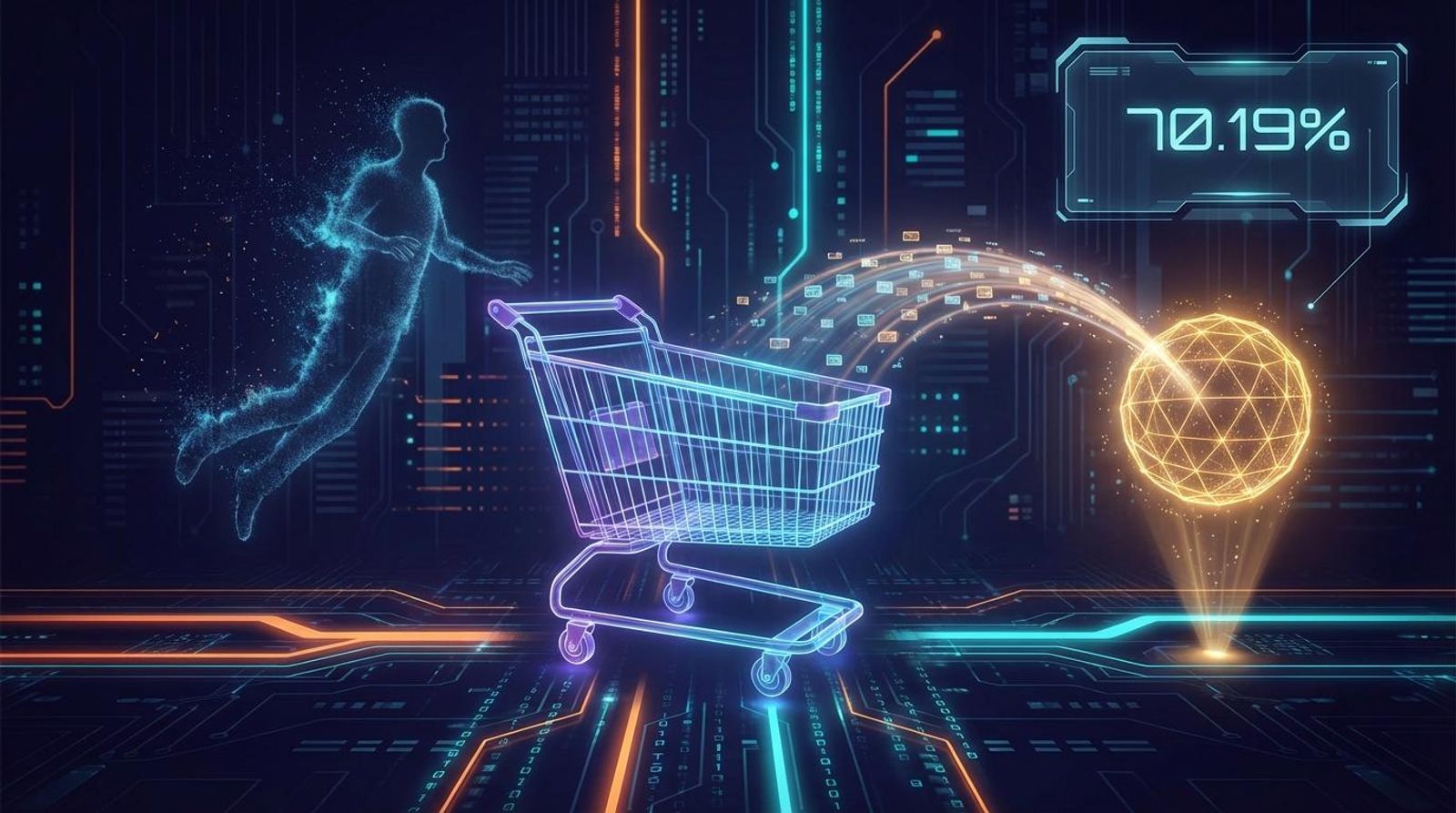

The 70.19% Ghost Story: Why Your Customers Are Ghosting You (and How to Win Them Back)
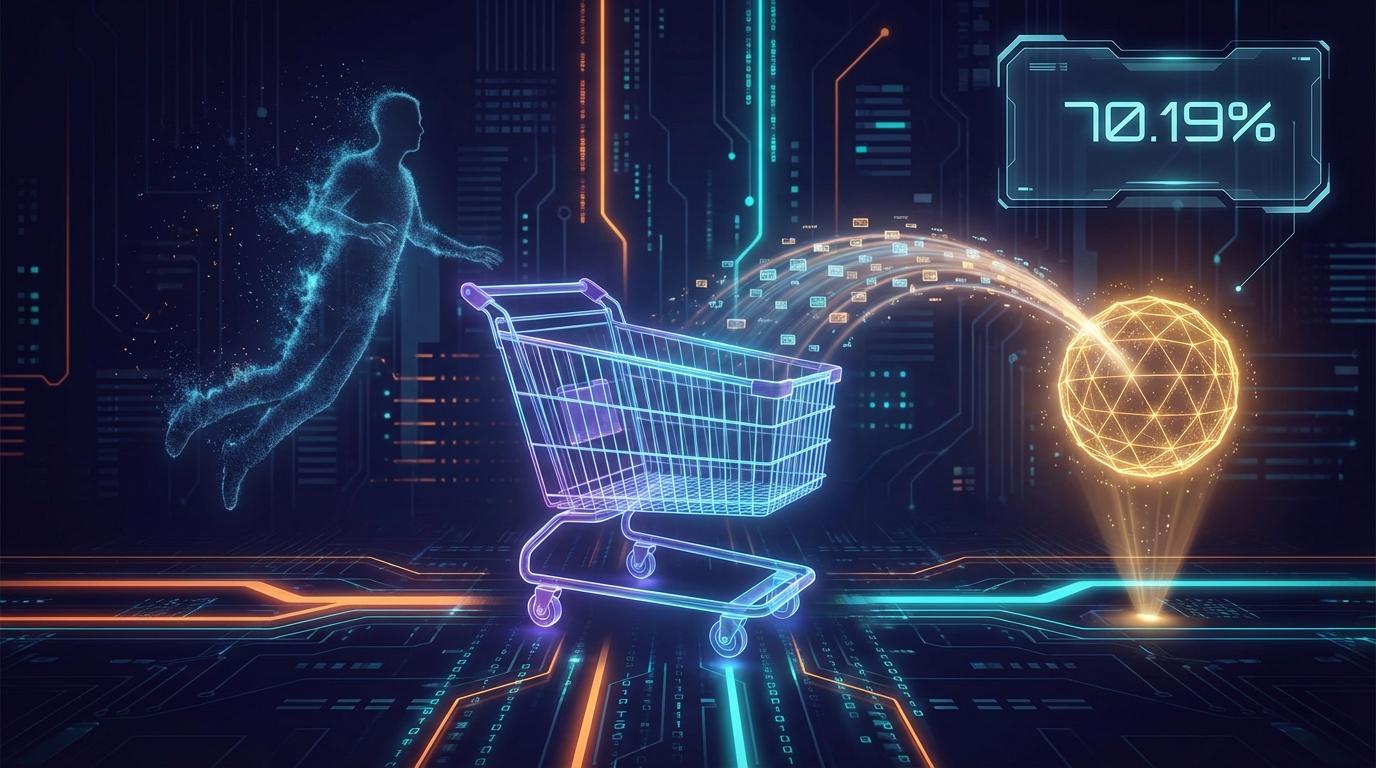
1. The Number That Keeps E-commerce Managers Awake at Night
In the quiet theater of digital analytics, there exists a figure so persistent it has taken on the quality of a haunting: the 70.19% Ghost Story. This is the "Conversion Chasm," a statistical precipice where approximately seven out of ten shoppers—having meticulously curated a cart full of aspirations—simply vanish into the ether before the final click. According to the Baymard Institute, this 69.99% to 70.19% benchmark has remained a stubborn constant for over a decade, representing a profound disconnect between consumer intent and successful execution.
Why does this chasm persist? Often, it is the result of a "Sticker Shock" sucker punch. For nearly half of these spectral shoppers, the sudden appearance of unanticipated shipping fees and taxes at the final stage acts as a psychological deterrent—the digital equivalent of a $10 cover charge at a dive bar. Furthermore, we must contend with the "Privacy Wall." To demand forced account creation is to impose an unnecessary cognitive burden. When a brand insists on a twenty-field form for a pair of socks, it is effectively asking for a second date before the first drink has even been served.
2. A Blast from the Past: How We Got This Flaky
To understand our current state of "flakiness," one must examine the archeology of the checkout. In the Dial-Up Days (2000–2005), abandonment was often a technical mercy; we operated in a world where Amazon’s "1-Click" was a patented miracle and a single incoming phone call could sever a connection mid-transaction. We moved into the Analytical Era (2006–2010), where we began to obsess over funnels, yet paradoxically cluttered the user experience with aggressive newsletter pop-ups and redundant data entry.
The true shift, however, arrived with the Mobile Revolution (2011–Present). As commerce migrated to the palm of the hand, abandonment rates spiked toward 80%. We asked consumers to navigate desktop-era architectures on bumpy bus rides, where "fat-fingering" a sixteen-digit credit card number became a barrier too high to climb. We have spent a decade refining the technology, yet the human psyche remains as easily distracted as ever.
3. The 2026 Survival Kit: AI Agents to the Rescue
As we look toward the horizon of 2026, the strategy for bridging the Conversion Chasm is shifting from reactive recovery to proactive orchestration. Enter the Plugin Agent—not a clunky script that drags down site performance, but a modern "orchestrator" that loads tools precisely when the moment demands.
We are seeing the rise of "Just-in-Time Support." Imagine an AI agent that monitors user telemetry and intervenes only when it detects hesitation—perhaps a user hovering over a "Returns Policy" link for a few seconds too long. It is the digital retail assistant that provides clarity without the intrusive "hovering" of a physical salesperson. Simultaneously, we are neutralizing "The Complexity Tax" through biometric magic. If a transaction requires more than two taps, it is an evolutionary failure. Face ID and "One-Tap" checkouts are transforming the ordeal of payment into a seamless biometric breeze. Finally, we must acknowledge the power of SMS Continuity. While email languishes in the inbox, a well-timed text nudge—linked to a pre-filled, biometric-ready cart—acts as the ultimate "Welcome Back" hug for the distracted shopper.
4. The "Is This Creepy?" Section: Ethics & Controversies
As our tools become more sophisticated, we must grapple with the ontological shift from "helpful" to "haunting." There is a fine line between good design and "Dark Patterns." The use of artificial scarcity—those ubiquitous "Only 2 left!" countdown timers—may drive a short-term click, but they erode brand trust faster than a scathing review.
Then there is the dilemma of dynamic pricing. Is it ethically sound to offer a 15% discount exclusively to those who abandoned their carts? Such a strategy creates a moral hazard, effectively penalizing loyal, decisive customers while rewarding the "flaky." Furthermore, with the death of the third-party cookie, "Identity Resolution" has become the new frontier. Brands are now attempting to "resolve" anonymous browsing into specific profiles behind the scenes. While efficient for sales, it raises uncomfortable questions about "shadow profiles" and the erosion of digital anonymity.
5. Fast Forward: The Era of "Invisible Commerce"
We are moving toward a future where the "checkout" as we know it ceases to exist, replaced by Invisible Commerce. We are entering the age of "Zero-Click Shopping," where IoT sensors and smart contracts facilitate the automatic replenishment of essentials before the consumer even registers a need. No cart, no abandonment, no friction.
Predictive Cart Population will soon become the standard. AI models, analyzing browsing velocity and seasonal intent, will present a "Beach Ready" cart the moment a user opens an app before a vacation. To mitigate "Return Anxiety," AR/VR validation—spatial computing that allows a user to "place" a sofa in their living room or "wear" glasses virtually—will close the trust gap that currently leads to abandonment. In this coming era, the brand that wins will be the one that makes the transaction invisible. The future belongs to those who turn the chore of "checking out" into a seamless, biometric whisper.
Share this article
Help others discover this content