
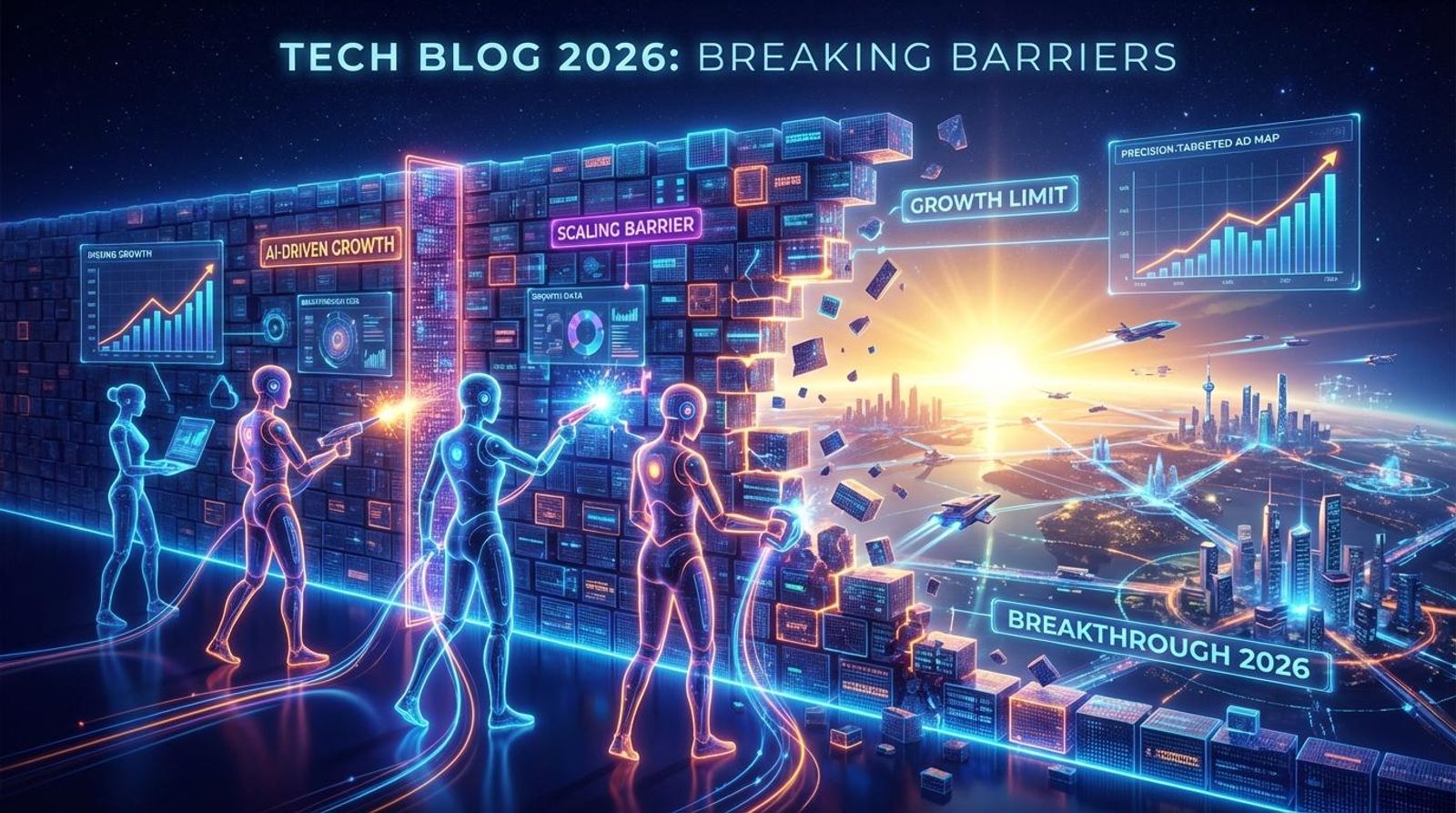

Smashing the "Scaling Wall" Without Emptying Your Bank Account
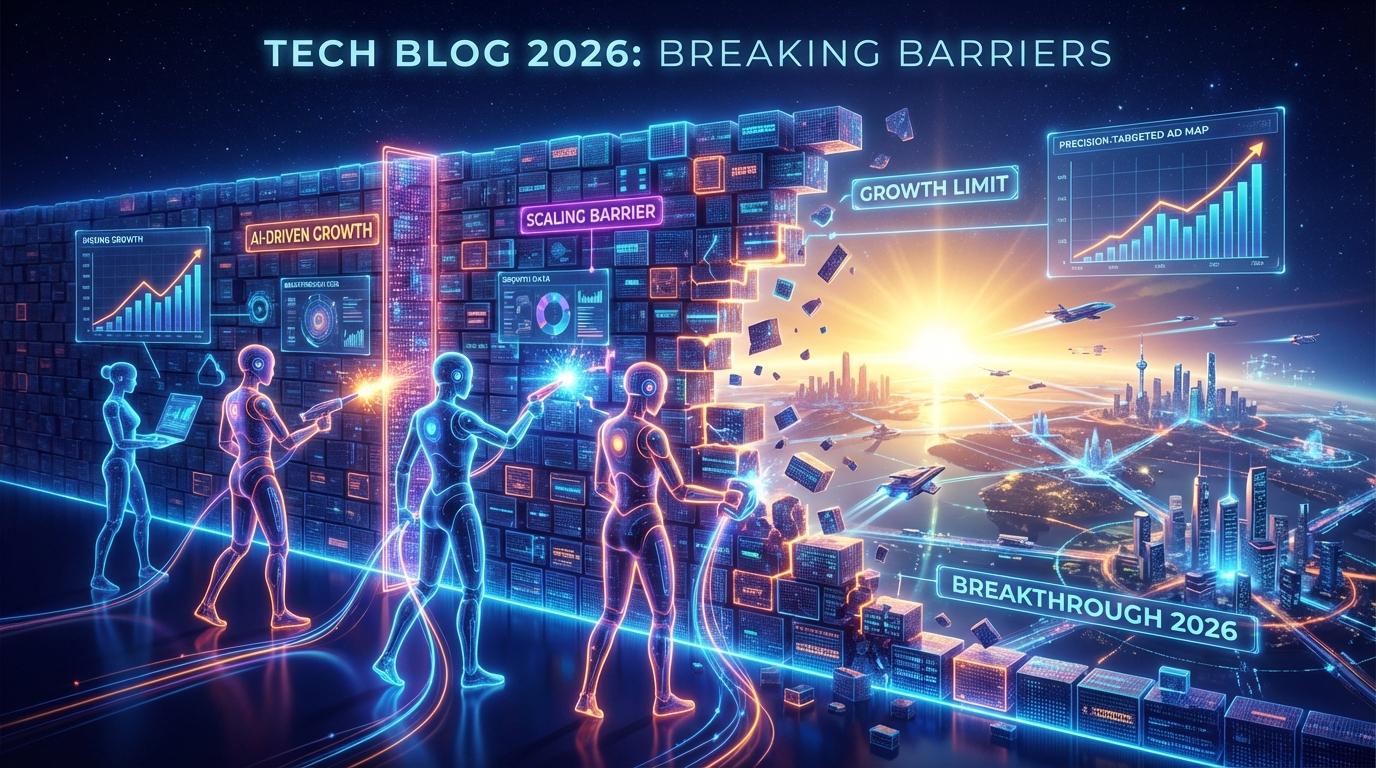
Growth is rarely a linear progression; it is more often a punctuated equilibrium. You reach a comfortable plateau—perhaps $1M, or even $10M in revenue—and the mechanics of your business hum harmoniously. Then, you attempt to expand into a new territory and the machinery fractures. Almost overnight, Customer Acquisition Costs (CAC) skyrocket. You have encountered what we now term "The Scaling Wall." In the landscape of 2026, attempting to overcome this barrier with brute-force ad spend is an exercise in futility.
Capital deployed in this manner merely purchases fleeting, expensive clicks, not enduring customers. The paradigm has definitively shifted from the crude acquisition of attention to precision-engineered conversion, championed by a newly minted hero: the AI Agent squad.
To understand this shift, it is instructive to cast a retrospective glance at the supposed "Golden Age" of 2020–2024. During this period, Direct-to-Consumer (D2C) brands captured nearly 20% of total retail sales, and expansion felt deceptively effortless. Yet, beneath the surface, profound structural vulnerabilities were taking root. The deprecation of third-party cookies—the infamous "cookie-pocalypse"—shattered traditional attribution models, effectively destroying the marketer's map. Concurrently, data silos emerged as impregnable fortresses.
Consider the archetype of "Marketing Maria," a diligent professional buried beneath disparate datasets from Shopify and Google Analytics that flatly refused to communicate. The prevailing strategy of that era—copy-pasting a domestic success into a foreign market and praying for serendipity—was fundamentally flawed.
The antidote to this historical inefficiency lies in the deployment of specialized AI agents. These are not merely passive tools, but autonomous force multipliers that redefine organizational capability. First, we observe the Ad Spy Agent. It operates as a tireless, digital private investigator, mapping the competitive topography of a new market and dissecting competitors' successful campaigns before a single dollar is risked. Next is the Ad Research Agent, an entity that transcends the primitive act of literal translation. It excavates "high-intent hooks" that resonate authentically with the cultural nuances of local demographics. Finally, the Landing Page Agent serves as the vital architectural bridge across "The Conversion Chasm." It dynamically generates bespoke web experiences possessing perfect one-to-one ad-to-page continuity, ensuring the user experiences no cognitive dissonance or feelings of being bait-and-switched. The culmination of this ecosystem? "Growth Gary," the modern Head of Growth, finally gazes upon a structurally sound, highly profitable 3:1 LTV:CAC ratio.
In the crucible of 2026, the industry consensus is unambiguous: scale is no longer a function of volume, but of precision. The modern apparatus relies on "Agentic AI"—entities that do not merely execute prompts but autonomously make decisions and orchestrate complex workflows. Consequently, we are witnessing a democratization of power; lean, agile teams are routinely outperforming monolithic enterprise giants because they can move with velocity and personalize deeply without the overhead of a fifty-person data science division.
Yet, to adopt this technology without examining its ethical underpinnings would be intellectually dishonest. We must confront the controversies inherent in this hyper-efficient machinery. Consider the "spy" factor: does the Ad Spy Agent represent a brilliant competitive edge, or is the systematic scraping and replication of competitor victories simply intellectual property theft sanitized by algorithms? Furthermore, we encounter the paradox of perfect targeting. When an advertisement mirrors consumer intent too flawlessly, it plunges the user into an "Uncanny Valley" of personalization. This hyper-targeting can easily curdle into a "creepiness factor," eroding brand trust and breeding profound ad fatigue. Lastly, we must remain vigilant regarding algorithmic bias. Predictive models are mirrors of their training data; an unexamined algorithm might misinterpret cultural norms or inadvertently ignore entire market segments, quietly institutionalizing prejudice beneath a veneer of mathematical objectivity.
Looking ahead to the horizon of 2027–2028, the trajectory suggests a radical ontological shift in commerce. We are rapidly approaching the era of "Agent-to-Agent Commerce." In this imminent reality, the brand’s AI will negotiate directly with the consumer’s personal "Shopping Bot." The transactional friction of human decision-making will be largely bypassed. We can foresee the rise of the fully autonomous marketing department—where a single, highly sophisticated strategic prompt initiates the rollout of an entire international branch. E-commerce storefronts will manifest as a real-time reality, instantaneously altering their aesthetic, pricing, and tone in milliseconds to reflect a user’s micro-location, the local weather, or unfolding cultural events.
As we navigate this complex terrain, it becomes evident that efficiency has transcended its status as a mere corporate buzzword; it is the fundamental prerequisite for survival. The era of recklessly buying clicks is relegated to the past. The imperative now is to architect a high-conversion, autonomous engine. The new market is waiting, but it yields only to precision.
Share this article
Help others discover this content