


Mind the Gap: Escaping the Traffic Trap and Surviving the Conversion Chasm
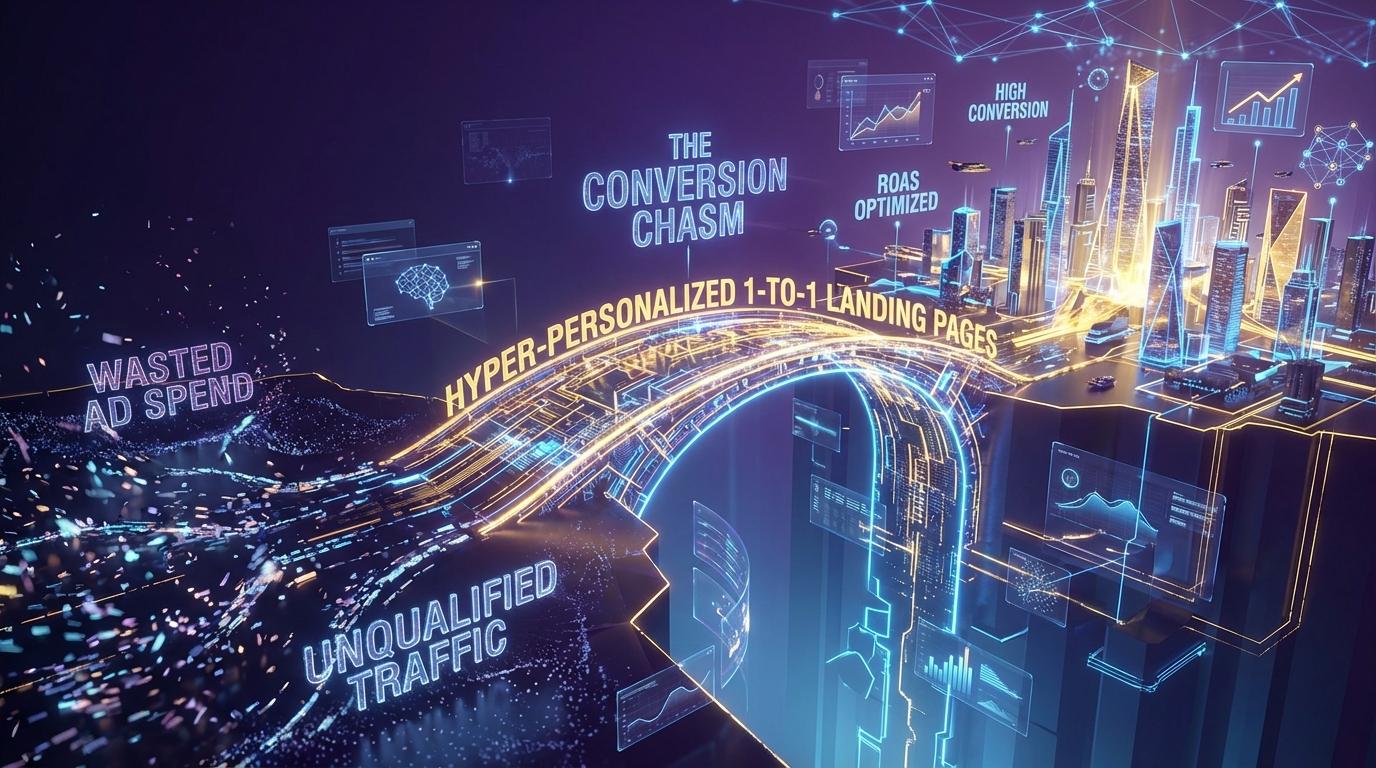
Let’s be brutally honest: up to 90% of your ad clicks are dying on the vine. We are currently witnessing a massive expenditure of capital intended to generate digital engagement, yet we frequently find ourselves high-fiving over climbing dashboard metrics while those hard-won clicks swan-dive straight into the "Conversion Chasm." This is the "Traffic Trap"—a strategic delusion where we mistake mere digital window-shopping for material economic growth. In our quest for scale, we have forgotten a fundamental truth: it is futile to pour water into a leaky bucket.

I. The Ontological Crisis: The Traffic Trap and the Conversion Chasm
The modern advertising landscape is defined by a profound disconnect between digital signal and economic realization. We must first unpack the Traffic Trap—the pervasive belief that high volumes of traffic are a proxy for commercial success. This delusion incentivizes organizations to chase "clicks" without possessing the functional infrastructure to process the human intent behind them.
This leads us to the Conversion Chasm: the void existing between the digital signal (the click) and material reality (revenue). Within this chasm, estimates suggest that the vast majority of contemporary advertising clicks perish. This "expiration" is not merely a technical failure; it is a failure to bridge the gap between human curiosity and measurable value. Whether due to friction-heavy landing pages or agonizingly slow "speed-to-lead" times, the result is the same: a profound loss of potential.
II. A Brief History of the Digital Journey: From Linear Clicks to Dark Social
To understand our current predicament, we must examine the evolution of the digital ecosystem.
- The 1990s & Early 2000s (The Era of Linear Clicks): In the digital dawn, the user journey was direct and transparent. A click was a novel and highly accurate proxy for interest. Because the internet was less fragmented, the gap between a visual stimulus and a transaction was narrow and easily observed.
- The 2010s (The Tracking Golden Age): This era was defined by the dominance of the third-party cookie. Advertisers operated under a psychological illusion of total surveillance, utilizing "Last-Click Attribution" to assign value. While this provided a sense of control, it was ultimately a tracking delusion that ignored the burgeoning complexity of cross-device behavior.
- The 2020s (The Great Fragmentation): We have entered a "visibility black hole." The collapse of the tracking status quo has seen the rise of platform "walled gardens" (Meta, Google, Amazon) and "Dark Social." This phenomenon—where the most significant human influence occurs via private DMs, Slack, and untreatable peer-to-peer sharing—means that the core of the decision-making process is now hidden from traditional tracking dashboards.
III. Bridging the Gap: Epistemological Shifts in Influence
The current industry opinion suggests a growing philosophical divide between Demand Capture and Demand Generation.
Building a bridge across the chasm requires an epistemological shift. Rather than simply harvesting existing intent via high-volume clicks (Demand Capture), organizations must focus on pre-click education and human influence (Demand Generation).
The "VIP Pass" to this new world is Zero-Party Data. By utilizing interactive assessments and quizzes, organizations can gather information willingly volunteered by users. This moves us away from coercive tracking and toward a model of consensual engagement, creating a frictionless, personalized red carpet that guides the buyer across the void.
IV. The Attribution Wars and the Deception of CPL
The industry is currently embroiled in the "Attribution Wars," a conflict between two analytical ideologies:
- Marketing Mix Modeling (MMM): A top-down, privacy-safe approach using macroeconomic statistical analysis. It is gaining favor as it prioritizes long-term channel contribution over individual user tracking.
- Multi-Touch Attribution (MTA): A granular, bottom-up approach that attempts to track every touchpoint. In a post-cookie world defined by Apple’s ITP (Intelligent Tracking Prevention), many experts argue MTA is functionally broken.
Furthermore, we must confront the CPL Lie. Striving for the lowest Cost Per Lead is a "vanity metric" that often widens the Conversion Chasm. It incentivizes algorithms to find low-intent "digital wanderers"—those who click because it is easy, not because they intend to buy.
To survive this visibility black hole, technical adaptations like Server-Side Tracking (such as Meta’s Conversions API or CAPI) are no longer optional luxuries; they are structural requirements for data survival in a privacy-first ecosystem.
V. 2026 and Beyond: The Collapse of the Funnel
Looking toward the future, we anticipate a transition from volume-based to Value-Based Optimization (VBO). Future machine learning models will be trained not to find "leads," but to identify "customers" with the highest Lifetime Value (LTV).
By 2026, we expect to see the "Collapse of the Funnel."
- Predictive Bidding: AI will utilize real-time probability to evaluate the likelihood of a click perishing in the void before the bid is placed, effectively ghosting window shoppers.
- AI Agents as Bridge-Builders: The traditional, static landing page—a major source of friction—will be replaced by conversational AI agents. These agents will qualify, nurture, and conclude transactions instantaneously within the ad unit itself.
In this landscape, IntelliAssist emerges as the essential architecture for the modern strategist. By moving beyond the raw volume of the "Traffic Trap" and toward predictive, intent-based engagement, we can finally stop throwing budget into the void.
Reflections for the Modern Strategist
- Fix the bucket before buying more water: Scaling ad spend on a high-friction, unoptimized architecture is an exercise in futility. Structural integrity must precede budget increases.
- Sanity over Vanity: Shift organizational focus from "Cost Per Click" to "Cost Per Customer Acquisition." Revenue is the only metric that preserves economic sanity.
- Quality over Quantity: A trickle of high-intent traffic is exponentially more profitable than a flood of disengaged clickers.
- Adopt Server-Side Architecture: Treat server-side tracking as a mandatory structural requirement for data survival.
Bridge the value gap: Book a Demo with IntelliAssist.
#IntelliAssist #EcommerceGrowth #AIRetail #MarTech #AIPersonalization #RetailInnovation #EcommerceSEO #SmartBusiness #GrowthHacking #AI2026
Share this article
Help others discover this content