
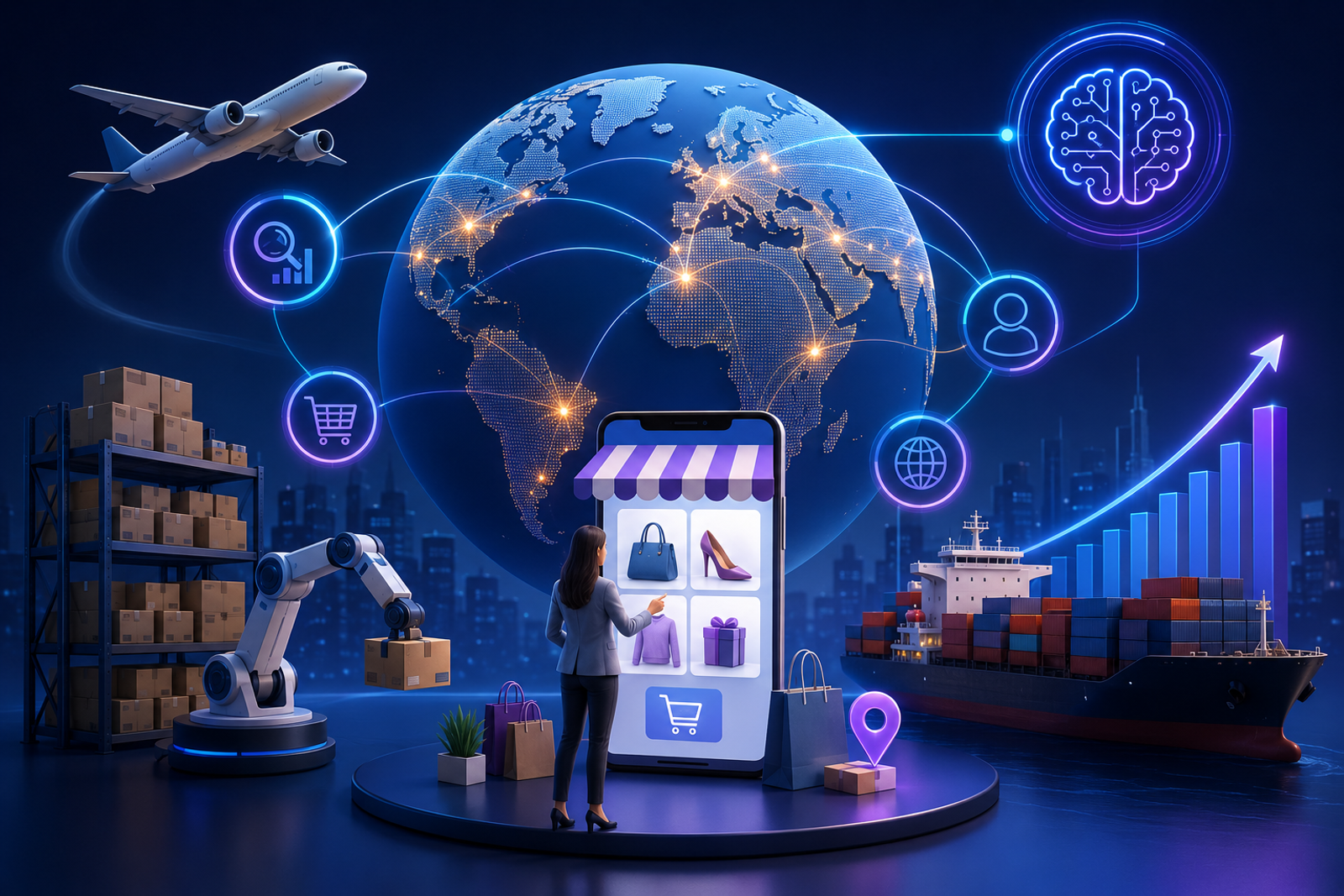

Expanding into a new market used to mean months of planning, expensive agencies, local hiring, and a lot of guesswork.
Today, things look very different.
In 2026, some of the fastest-growing e-commerce brands are launching in multiple countries without building large international teams first. What changed isn’t ambition — it’s infrastructure. AI has made global expansion faster, smarter, and far more accessible. The brands winning internationally are no longer the ones spending the most. They’re the ones adapting the fastest.
The Old Expansion Model No Longer Works
For years, global growth followed the same pattern:
- Launch ads in a new region
- Translate the website
- Hire local partners
- Hope demand exists
- Adjust after losses
The problem? It was slow, expensive, and reactive.
Consumer behavior now changes too quickly for manual expansion strategies. Trends shift overnight, regional preferences evolve constantly, and shoppers expect localized experiences immediately — not months later. A customer in Germany, Brazil, or the UAE doesn’t just want translated copy. They expect the experience to feel native to them.
That’s where AI changes the game.
AI Is Turning Global Expansion Into a Real-Time System
Modern AI tools don’t just automate tasks. They help brands make smarter decisions before costly mistakes happen. Instead of relying on assumptions, brands can now use AI to:
- Predict demand in specific regions
- Identify high-potential products before launch
- Adapt messaging for local audiences
- Optimize pricing based on local buying behavior
- Manage compliance and taxes automatically
- Personalize storefronts in real time
Global expansion is no longer just about entering more countries. It’s about entering them intelligently.
Localization Is No Longer Just Translation
One of the biggest mistakes brands still make is confusing translation with localization. Direct translation rarely creates connection. AI-powered localization now adapts:
- Tone of voice
- Product positioning
- Visual preferences
- Shopping behavior
- Seasonal relevance
- Cultural context
For example, the same skincare product may be marketed around:
- “Minimal routines” in Japan
- “Luxury self-care” in the UAE
- “Clean ingredients” in Europe
The product stays the same. The presentation changes. That level of adaptation used to require entire regional marketing teams. Now AI can help brands do it at scale.
Predictive Demand Forecasting Is Reducing Risk
Launching internationally has always carried inventory risk. Too much stock leads to waste. Too little creates missed demand and customer frustration. AI-driven forecasting is helping brands avoid both.
By analyzing:
- Search behavior
- Seasonal patterns
- Social signals
- Regional buying trends
- Historical demand data
AI can predict where products are likely to perform before brands invest heavily. Many retailers using predictive systems are already seeing:
- Fewer stockouts
- Lower forecasting errors
- Better inventory efficiency
- Faster expansion decisions
The result is a leaner, more confident expansion strategy.
Compliance Is Becoming Automated
One of the biggest barriers to international growth has always been operational complexity. Every region comes with different:
- Tax structures
- Shipping regulations
- Currency systems
- Privacy laws
- Import duties
Managing all of this manually slows growth dramatically. AI-powered compliance systems now help brands:
- Calculate duties and taxes instantly
- Adjust pricing automatically
- Generate localized invoices
- Monitor changing regulations
- Reduce operational errors
This allows teams to focus more on growth and less on paperwork.
The Rise of AI-Powered Storefronts
The traditional “one global website” approach is disappearing.
Modern storefronts are becoming adaptive experiences that change based on the visitor’s:
- Location
- Device
- Language
- Intent
- Shopping behavior
A shopper in Singapore may see:
- Different products
- Different visuals
- Faster delivery messaging
- Different payment methods
- Different promotions
…than a shopper visiting from Canada.
This is where AI becomes more than an automation tool. It becomes the intelligence layer behind the customer experience.
Why Agentic Commerce Matters
Another major shift shaping 2026 is the rise of Agentic Commerce.
Consumers are increasingly using AI assistants to:
- Compare products
- Research brands
- Find deals
- Recommend purchases
- Complete transactions
That means brands are no longer marketing only to humans — they’re also optimizing for AI-driven recommendation systems. If your product data, pricing, reviews, and site structure aren’t AI-readable, your brand risks becoming invisible in AI-assisted shopping environments.
This is why modern growth strategies now include:
- Structured product data
- AI-readable catalogs
- Conversational search optimization
- Answer Engine Optimization (AEO)
- Faster storefront infrastructure
The future of visibility depends on how well machines understand your brand.
The Brands Winning Globally Aren’t Necessarily Bigger
They’re simply faster at adapting.
AI is giving mid-sized brands access to capabilities that were once limited to enterprise retailers:
- Real-time localization
- Predictive intelligence
- Automated compliance
- Dynamic personalization
- AI-assisted customer experiences
Global expansion is no longer only a budget challenge. It’s now a systems challenge.
Final Thoughts
The idea of entering new markets used to feel overwhelming for most e-commerce brands. Today, AI is removing many of the barriers that once made international growth slow, expensive, and risky. The brands that succeed in 2026 won’t be the ones trying to manually manage every region. They’ll be the ones building intelligent systems that adapt automatically. Global growth is no longer about opening offices everywhere. It’s about building infrastructure that understands customers everywhere.
Share this article
Help others discover this content