
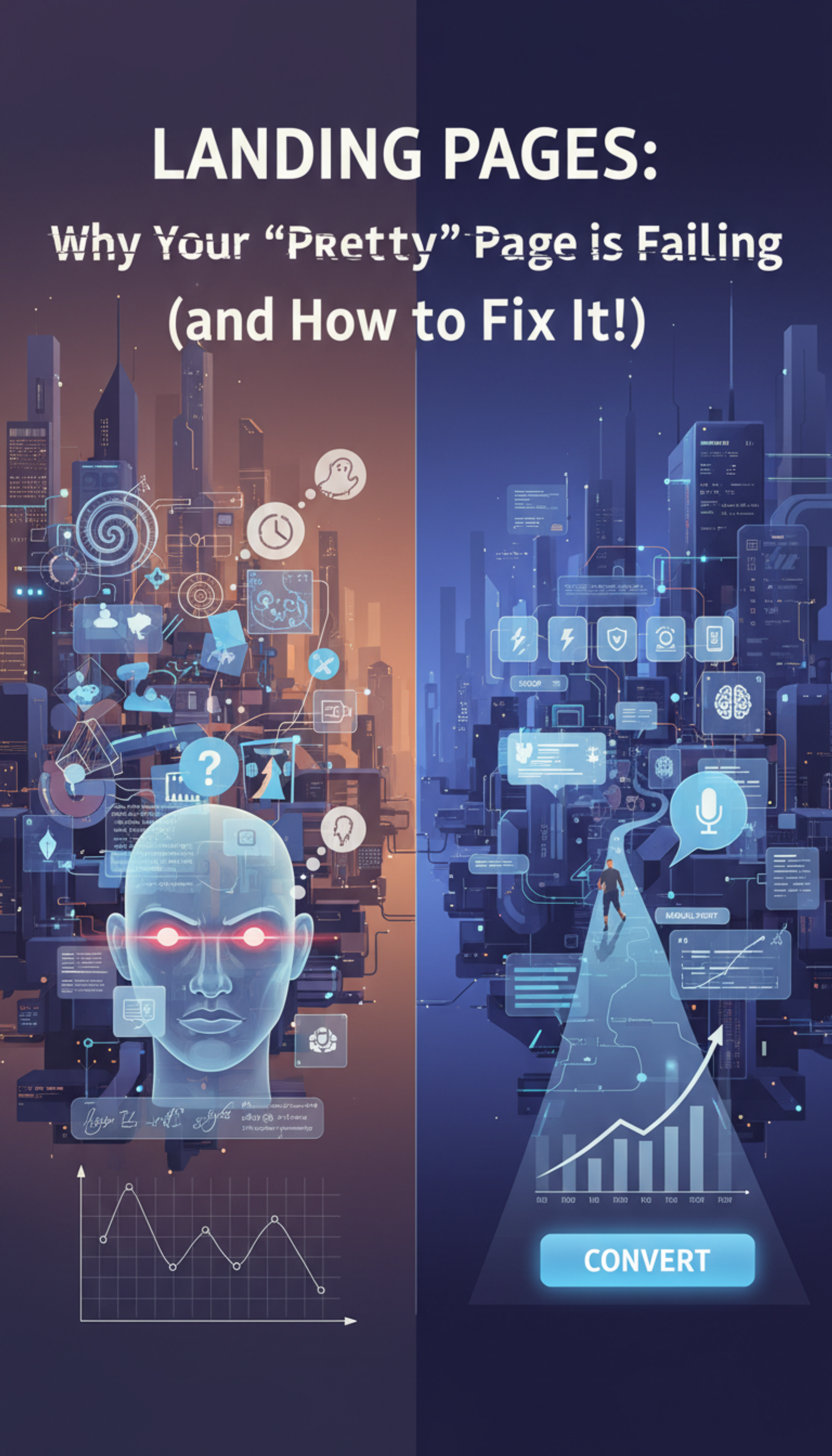

Landing Pages: From Presentation to Performance
This document explores the critical shortcomings of many landing pages, emphasizing that their failure often stems from prioritizing aesthetics over user behavior, leading to low conversion rates.
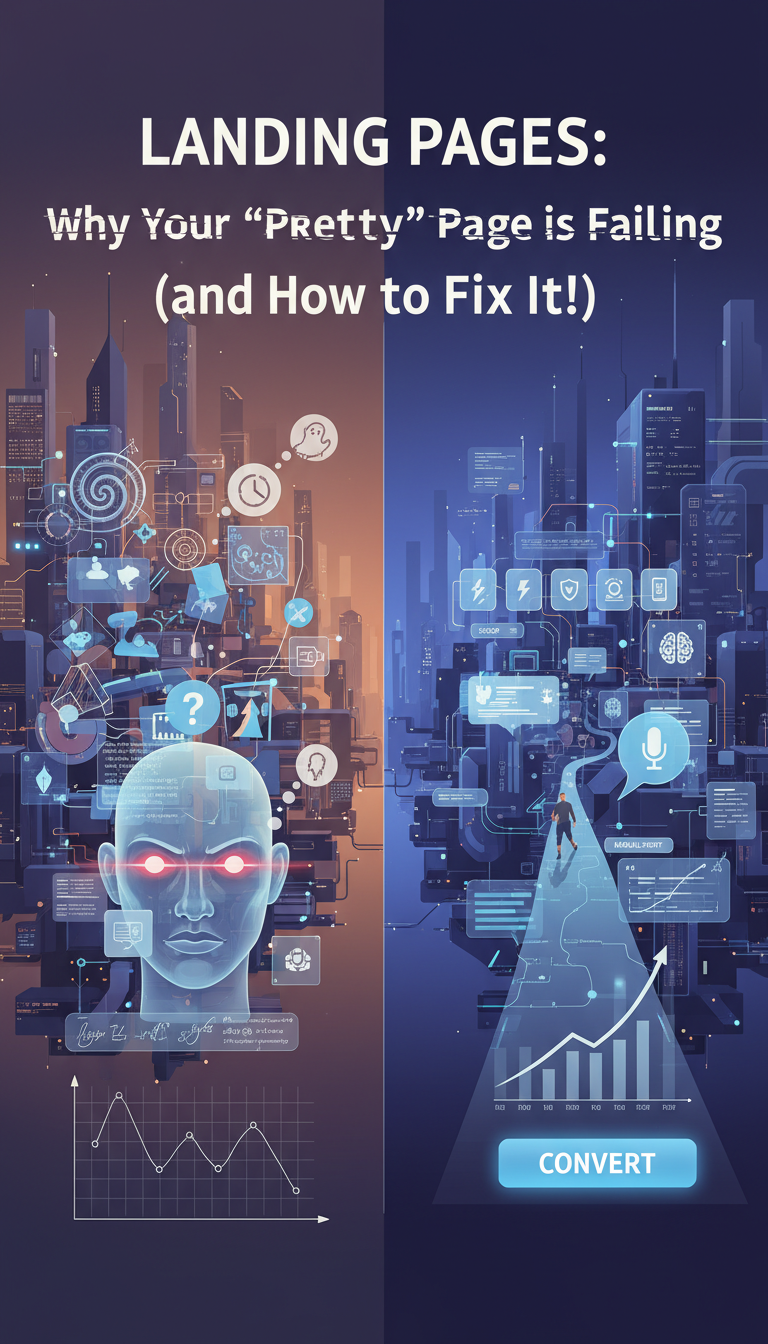
I. The "Instant Judgment Zone": Common Landing Page Fatal Flaws
Users form an initial impression of a landing page in approximately 0.05 seconds. Fatal flaws that lead to abandonment include:
- Visual Overload: Excessive elements, clashing colors, and lack of clear visual hierarchy confuse users, hindering a directed scan.
- "What's In It For Me?" Mystery: Failure to immediately and clearly articulate the value proposition leaves users uncertain about their gain.
- Snail-Paced Loading: A 1-second delay can reduce conversions by 20%, and 40% of users abandon pages taking longer than 3 seconds to load.
- Bait-and-Switch: Discrepancies between ad promises and landing page content erode trust and damage brand reputation.
- The Great Wall of Forms: Requesting excessive information upfront is intrusive and deters users.
- No Social Proof: Lack of testimonials, reviews, or case studies creates a trust deficit.
- Ignoring the Mobile Majority: Pages not rendering flawlessly on smartphones are considered obsolete.
II. Historical Evolution of Landing Pages
The development of landing pages mirrors the internet's evolution:
- Early Days (Early 2000s): Rudimentary, static pages focused on online presence rather than conversions, often with poor user experience (e.g., auto playing music, flashing animations). Microsoft's early digital dominance contributed to this trend.
- The CRO Revolution (Post Dot-Com Bust): The realization that traffic alone was insufficient led to the rise of Conversion Rate Optimization (CRO).
- Intuition to Data: Early CRO relied on guesswork, but the launch of Google Analytics (2005) and Google Website Optimizer (2007) democratized data access.
- A/B Testing: This became a cornerstone for testing variations and understanding user behavior objectively.
- The Modern Page: Characterized by clean designs, compelling Calls to Action (CTAs), mobile-first responsiveness, and continuous A/B testing, influenced by user scanning patterns like the "F-pattern."
III. The "Beauty vs. Brains" Debate: Aesthetics vs. Performance
The debate centers on whether visually stunning pages necessarily convert better.
- "Boring Works" Camp: Argues that excessive aesthetics create "cognitive overload" and hinder conversions, prioritizing clear, concise information and easy action paths.
- "Both/And" Camp (Prevailing View): Believes good design supports good behavior by guiding users through visual hierarchy, strategic color contrast, and intuitive layouts without sacrificing appeal.
- Ethical Considerations: The increasing sophistication of behavioral optimization raises questions about persuasion versus manipulation, data usage, and user privacy.
IV. Future of Landing Pages: AI, Immersive Experiences, and Beyond
Emerging technologies and evolving user expectations will shape future landing pages:
- AI Takes the Wheel: Real-time dynamic generation and optimization of landing pages tailored to individual user preferences and behaviors (hyper-personalization).
- Immersive Experiences (XR/AR/VR): Interactive 3D product demonstrations, virtual showrooms, and immersive brand interactions.
- Talking Pages (Conversational UX/VUI): Voice commands and AI-powered chatbots for more natural user interaction.
- Low-Code/No-Code Revolution: Empowering non-technical users to build sophisticated, behavior-driven landing pages through drag-and-drop interfaces.
- Accessibility as Standard: Integrating features like voice navigation, screen reader compatibility, and high contrast options as fundamental requirements for inclusivity.
- Speed, Speed, Speed: With advancements like 5G and 6G, sub-1-second load times are expected to become the norm, demanding extreme optimization.
V. Conclusion: Shift from Presenting to Performing
The core message is to move beyond landing pages as mere digital brochures. The focus must shift to understanding and designing for user behavior: their scanning habits, rapid judgments, need for clarity, and inherent skepticism. The new approach involves auditing existing pages, prioritizing performance over pure aesthetics, meticulously analyzing user data, and actively seeking audience feedback. Building landing pages that work harder, respect user time, and provide genuine value is crucial for business success.
Share this article
Help others discover this content