

Is Your Ad Scent Stinking Up the Funnel? Why Consistency is the Ultimate ROAS Power Move
In the theater of modern commerce, we spend a king’s ransom on the opening act. We obsess over the "hook"—the perfect scroll-stopping image, the pithy headline, the precise targeting of a Meta or Google algorithm. Yet, there is a quiet tragedy occurring in the seconds after the click. We invite the guest to the party, only to vanish the moment they step through the door.
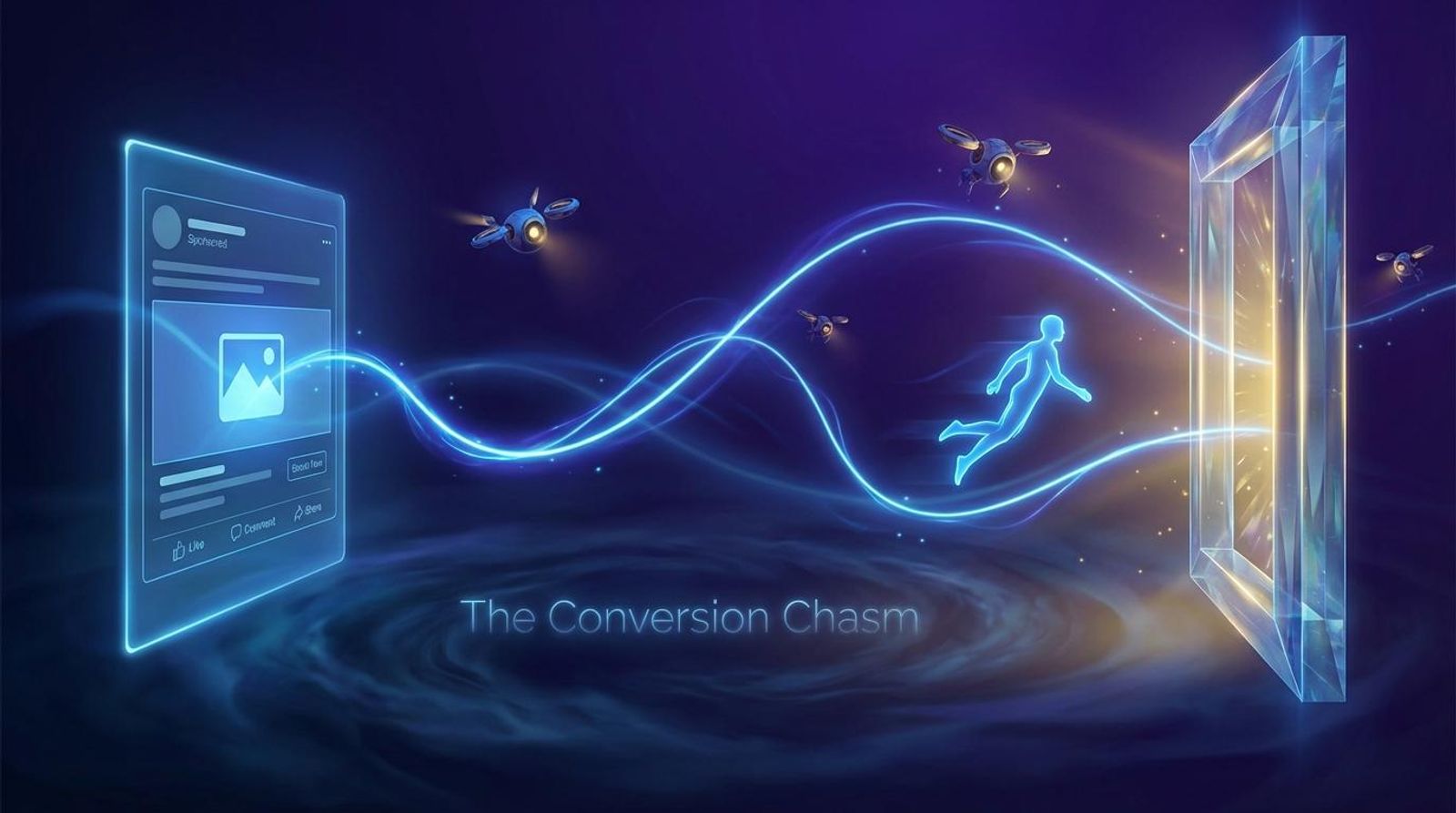
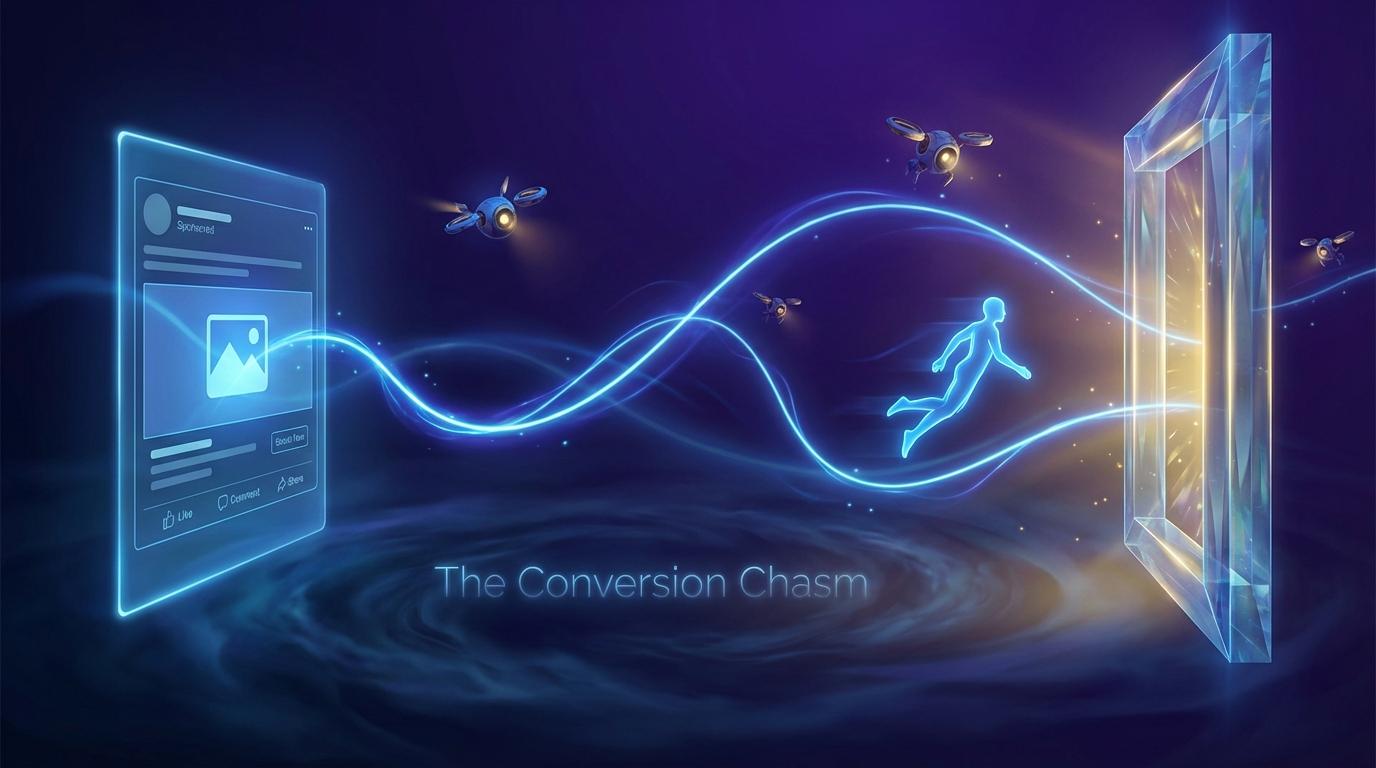
This is the "Conversion Chasm," a digital void where roughly 97% of ad clicks disappear into thin air before ever reaching a checkout page. To understand why this happens, we must look beyond spreadsheets and into the ancestral machinery of the human brain.
The 97% Problem: Welcome to the Conversion Chasm
When a user clicks an ad, they are not merely performing a mechanical action; they are expressing a fragile state of intent. For a brief moment, their interest is at a fever pitch. They have seen something—perhaps a pair of "Sustainable Gold Earrings"—that promises to solve a want or a need.
In this transition from the ad to the landing page, the user is looking for "Psychological Validation." They need to know, instantly and intuitively, that they are in the right place. If they click an ad for those earrings and land on a generic homepage, the brain experiences "Cognitive Load." The mental "short-circuit" occurs because the promise of the ad does not match the reality of the destination. The intent evaporates, and they bounce.
We call the invisible thread that prevents this evaporation "Ad Scent." It is the visual and narrative continuity that reassures the customer: Yes, the path you chose is the correct one. You may relax and shop.
Back to the Future: The Evolution of the "Scent"
To understand why "scent" matters, we have to look at how we are wired. In the 1990s, researchers Peter Pirolli and Stuart Card developed Information Foraging Theory. They posited that humans navigate the digital world much like our ancestors navigated the physical one—like hungry squirrels searching for nuts. We follow "scents." If the trail is strong, we persist. If the scent goes cold, we move on to a more promising patch of woods.
In the early days of the web, we were clumsy foragers. Marketers would dump every click onto a cluttered homepage, leaving the user to hunt for what they were originally promised. Then came the "Unbounce era," which introduced the concept of "Message Match." We realized that if the headline on the page mirrored the headline in the ad, the conversion rate climbed. We learned that the hunter (the customer) only stays on the trail if the scent remains fresh from the first interaction to the final "Thank You" page.
The Math of Continuity: Why "One-Size-Fits-All" is a Luxury You Can’t Afford
There is a cold, mathematical elegance to this psychological consistency. Data suggests that hyper-targeted, one-to-one landing pages—where the page is a literal extension of the ad—can drive a 202% lift in conversions compared to generic alternatives.
Consider the high-stakes world of fashion, where a 1.9% conversion rate is the industry standard. In such a landscape, survival is a game of inches. By perfecting the ad scent, you aren't just "improving a page"; you are effectively slashing your Customer Acquisition Cost (CAC) in half. It is the most efficient way to squeeze more juice out of a static budget. Fixing the "leaky pipe" between the click and the cart allows for a higher Return on Ad Spend (ROAS) without spending an extra dime on the platforms themselves.
The Growth Marketer’s Dilemma: The Wall of Scale
If the benefits are so clear, why isn't every brand doing it? Because maintaining this level of precision is an operational nightmare.
Imagine "Marketing Maria," a growth lead trying to scale a brand. She has 50 different ad variations testing 50 different hooks. To maintain a perfect scent, she would need to build 50 unique landing pages. It is a manual bottleneck that kills momentum.
This leads to a constant philosophical debate: do we go "Broad," trusting the algorithm to find the audience while using a generic page, or do we go "Specific," maintaining a high-intent scent that is difficult to manage?
The stakes for this debate are rising. By 2026, we face a "Privacy Apocalypse." With the death of third-party cookies and the tightening of iOS tracking, the second chance is disappearing. Retargeting is becoming a ghost of its former self. The first click must count, because it may be the only one you get. Ad scent is no longer a "nice-to-have" optimization; it is your primary insurance policy against the "one-and-done" bounce.
Enter the Machines: Automating the Scent
As we look toward the near future, the manual labor of maintaining consistency will fall away, replaced by the "Landing Page Agent." We are entering an era where Generative AI can "read" an ad and instantly construct a destination page that mirrors its tone, imagery, and specific offer.
These AI agents don't just copy-paste text; they pull live data from platforms like Shopify to ensure that the price, stock levels, and product variations on the page are an exact reflection of what the user saw in their feed. They close the analytical loop by identifying which "scent trails" are actually leading to treasure, allowing marketers to double down on what works in real-time.
Summary: Don't Lose the Trail
By 2026, the machines will handle the bidding, the targeting, and the creative variations. The playing field of the "hook" will be leveled. Your only remaining competitive advantage will be what happens in the sacred space after the click.
The brands that thrive will be those that respect the user’s journey enough to keep the trail warm. If your ad scent stinks, you aren't just losing a click; you're losing the hunt. Keep the scent alive, or get left behind in the chasm.
Share output
Share this article
Help others discover this content