
AI Performance Marketing Revolution: A Comprehensive Summary
Embracing the AI Paradigm Shift
The landscape of performance marketing is undergoing a significant transformation driven by the integration of Artificial Intelligence (AI), exemplified by new tools from Google and Meta. This shift represents a paradigm change, moving beyond incremental upgrades to fundamental changes in how marketing campaigns are conceived and executed.
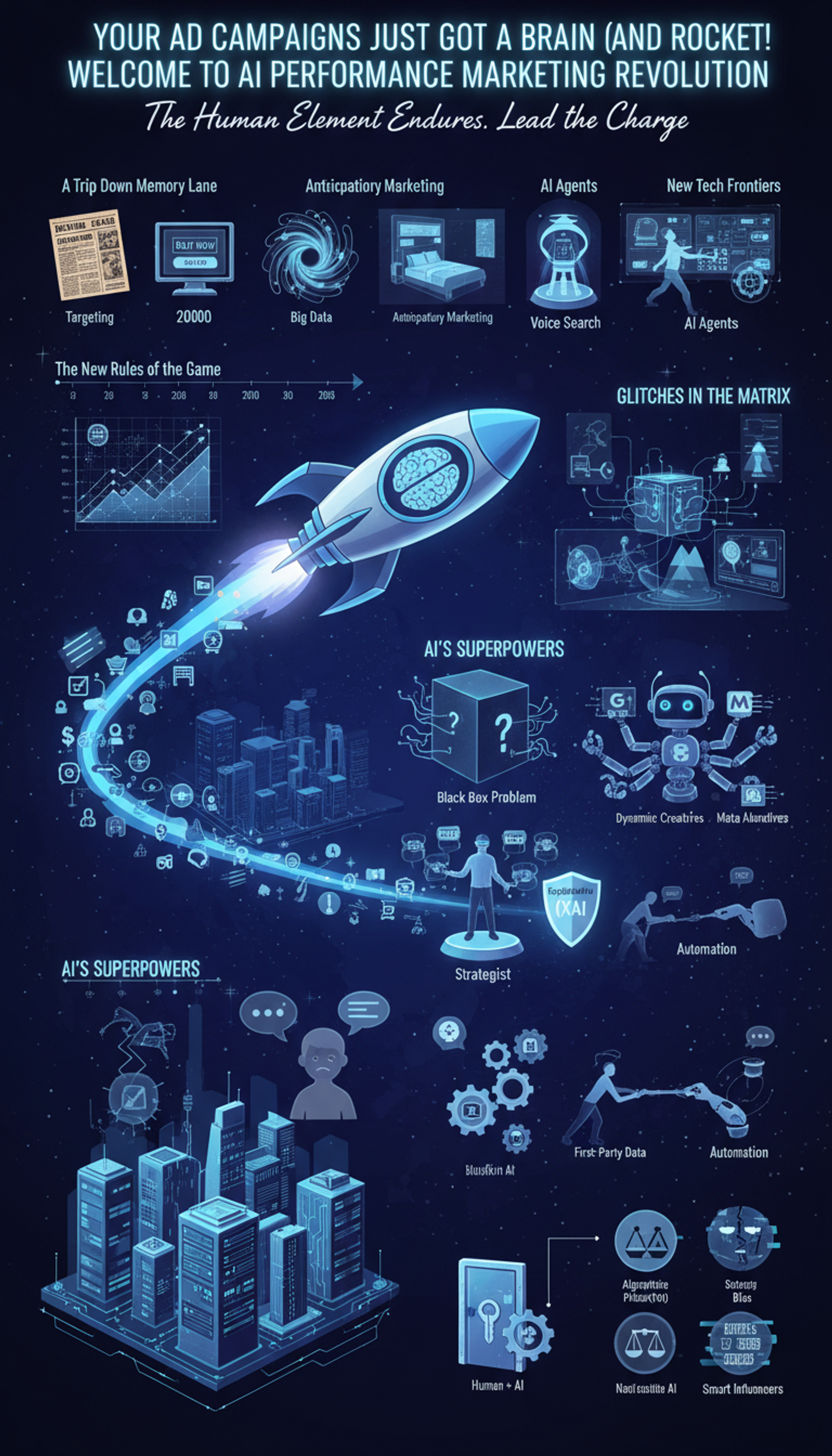
Evolution of AI in Marketing
AI's presence in marketing has been a gradual evolution:
- OG Days (50s-90s): Characterized by analog advertising, basic data segmentation, and rudimentary email lists. Targeting involved placing ads in specific magazines.
- Dot-Com Boom (2000s): The internet facilitated the emergence of recommendation engines (e.g., Amazon) and the beginnings of programmatic advertising (e.g., Google Ads). Real-time optimization was a nascent concept.
- Big Data Explosion (2010s): The proliferation of data led to advanced personalization (e.g., Netflix, Spotify) and the widespread adoption of machine learning. AI transitioned from a calculation tool to a powerful assistant for pattern recognition and consumer behavior prediction.
- Today's Reality (2020s): AI is now central to campaign execution, automating tasks and actively strategizing based on data analysis. The distinction between human intuition and algorithmic precision is blurring.
AI's Capabilities in Performance Marketing
AI is transforming various aspects of performance marketing:
- Targeting: AI analyzes vast datasets (demographics, browsing history, purchase behavior) to identify ideal customers and create highly accurate "lookalike" audiences.
- Real-Time Optimization: AI continuously optimizes campaigns dynamically, including Dynamic Creatives and Instant Bid Adjustments.
- Key AI Platforms:
- Meta Advantage+: Praised for efficiency and significant ROAS/CPA improvements (reported 15-32% ROAS increases).
- Google Performance Max (PMax): Offers broad reach and demonstrated substantial conversion lifts (20-90%).
- Broader Applications: AI extends to Chatbots, Generative AI for ad copy, and Funnel Optimization.
Controversies and Challenges
Despite its benefits, AI presents significant challenges:
- The "Black Box" Problem: Lack of transparency into AI's decision-making, leading to confusion about true performance.
- Control vs. Automation: Marketers' unease regarding loss of granular control with limitations in platforms like Meta Advantage+ and PMax.
- Ethical Concerns:
- Data Privacy: Concerns about protection and compliance (GDPR, CCPA).
- Algorithmic Bias: Biases in training data leading to unfair practices.
- Deceptive AI: Generative AI's potential for misinformation and deepfakes.
- Loss of Human Touch: Fear of sacrificing creativity and human connection.
Strategies for Thriving in an AI-Dominated Landscape
Marketers can adapt and succeed by:
- Strategic Role: Shifting from micromanaging to architecting the overall marketing system.
- Demanding Transparency (Explainable AI - XAI): Pushing for "open box" solutions and clear reporting.
- Data Protection: Prioritizing first-party data as a valuable asset.
- Exploring New Channels: Venturing into less AI-saturated channels like CTV and influencer partnerships.
- Embracing "Human + AI": Combining AI's analytical power with human strategic vision and creativity.
- Continuous Learning: Investing in new skills such as prompt engineering and data interpretation.
Future Outlook of AI in Marketing
The future of AI in marketing is expected to include:
- Hyper-Personalization: Real-time, individualized tailoring of ads and messages.
- Anticipatory Marketing: AI predicting and catering to consumer needs proactively.
- Autonomous AI Agents: AI managing entire campaigns from start to finish.
- New Technology Frontiers: Integration of AR/VR, voice search optimization, blockchain for transparency.
- Ethical Imperative: Stronger focus on responsible AI, data privacy, fairness, and bias prevention.
Conclusion
AI is a transformative force in performance marketing, offering significant efficiency and power. However, the human element—strategic oversight, data ownership, and creative ingenuity—remains crucial for unlocking AI's potential for genuine growth. The future lies in a collaborative "Human + AI" approach, building a more engaging, ethical, and effective marketing ecosystem.
Share this article
Help others discover this content