
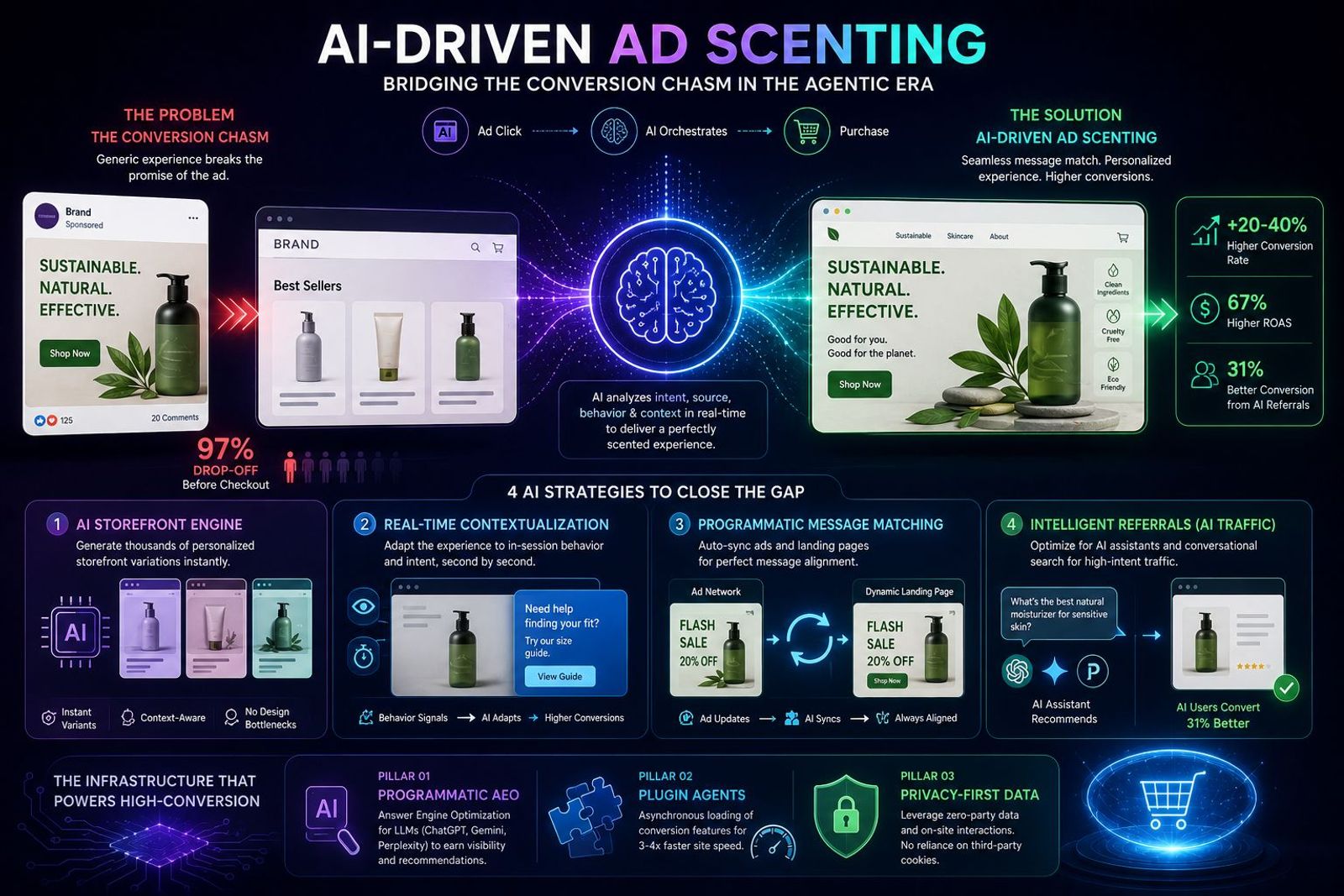

Bridging the “Conversion Chasm” in an era of AI-driven shopping journeys
Most brands think their problem is traffic.
It’s not.
The real problem starts after the click.
A customer sees an ad that feels personal, relevant, and exciting. They click expecting a seamless experience — but instead land on a generic product page that looks nothing like the ad they just interacted with. That disconnect is where conversions die. In 2026, shoppers move fast. Their expectations are shaped by AI-powered recommendations, personalized feeds, and instant answers from platforms like ChatGPT, Gemini, and Perplexity. If your landing experience doesn’t immediately continue the same story your ad started, users leave within seconds.
This gap between ad click and purchase is what many brands are now calling the Conversion Chasm — and it’s one of the biggest reasons why brands lose nearly 97% of paid traffic before checkout.
That’s where AI-driven Ad Scenting changes the game.
The New Standard: What “Ad Scent” Actually Means Today
A few years ago, ad scent simply meant matching the headline on your ad with the headline on your landing page. That’s no longer enough. Today, ad scent means creating a consistent emotional and visual experience from the moment a shopper sees your ad to the moment they decide to buy.
If your ad talks about:
- sustainable skincare,
- minimalist fashion,
- fast delivery,
- luxury quality,
- or budget-friendly pricing,
your landing page should instantly reinforce that exact message. The problem is that most storefronts still show the same generic experience to everyone. But customers are no longer shopping in a one-size-fits-all world. AI assistants and recommendation engines are already sending users with very specific intent. They expect websites to understand them immediately. Brands that maintain strong ad-to-page consistency are seeing:
- higher engagement,
- lower bounce rates,
- stronger trust,
- and significantly better ROAS.
4 Actionable AI Strategies
1. Deploy AI Storefront Engines
Creating separate landing pages manually for every campaign is impossible at scale.
That’s why modern e-commerce brands are moving toward AI storefront engines that automatically personalize experiences based on:
- ad source,
- audience behavior,
- product interest,
- device type,
- and shopping intent.
Instead of sending every visitor to the same static page, AI dynamically adjusts:
- layouts,
- messaging,
- product highlights,
- visuals,
- and CTAs.
For example:
A customer coming from a sustainability-focused Instagram ad might see eco-friendly messaging first, while someone from a discount campaign may immediately see bundle offers and savings. The experience feels more relevant — because it is.
2. Real-Time Contextualization
The best-performing storefronts in 2026 don’t stay static. They react in real time. AI can now analyze on-site behavior such as:
- scroll depth,
- hesitation,
- repeated product views,
- hover activity,
- and exit intent.
Then it adjusts the experience instantly. Imagine a shopper spending extra time on sizing details. Instead of leaving confused, the page automatically surfaces:
- fit recommendations,
- customer reviews,
- size guidance,
- or return reassurance.
Small interventions like these reduce friction dramatically and keep users moving toward checkout.
3. Programmatic Message Matching
One of the biggest reasons campaigns fail is inconsistency. Marketing teams update ads constantly:
- seasonal campaigns,
- influencer collaborations,
- flash sales,
- new launches.
But landing pages often stay outdated. AI-powered message matching solves this by syncing campaigns and storefronts automatically. If a Meta campaign changes creative direction, the landing page updates too. If a Google campaign highlights “same-day delivery,” the destination page prioritizes shipping speed.
That continuity matters more than ever because shoppers notice inconsistency immediately. Brands using dynamic message matching are already seeing:
- stronger conversion rates,
- lower acquisition costs,
- and higher campaign efficiency.
4. Intelligent Referrals & AI Traffic
Traffic from AI assistants is becoming incredibly valuable because it carries stronger intent. Users arriving through conversational search aren’t casually browsing — they’re often already looking for a solution. But these visitors expect websites to answer their needs instantly. That means your storefront needs:
- structured product information,
- conversational content,
- clear value propositions,
- and fast-loading personalized experiences.
This is where Answer Engine Optimization (AEO) becomes critical. The brands that structure their content for AI discoverability today will dominate tomorrow’s commerce ecosystem.
The Technical Infrastructure Behind High-Converting Experiences
Behind every seamless shopping journey is strong infrastructure. Modern AI-driven commerce depends on three key pillars:
1. Programmatic AEO
Optimizing product and brand data so AI engines can easily understand, recommend, and prioritize your products.
2. Intelligent Plugin Architecture
Fast-loading recommendation engines, reviews, bundles, and conversion tools that don’t slow down the storefront.
3. Privacy-First Personalization
Using first-party and zero-party data instead of relying on outdated third-party tracking methods.
The Mandate for 2026
The future of e-commerce belongs to brands that create continuity.
Not just better ads.
Not just better websites.
Better journeys. Customers no longer separate ads, storefronts, AI assistants, and shopping experiences into different stages. To them, it’s one continuous conversation.
The brands winning in 2026 are the ones using AI to make that conversation feel seamless, relevant, and frictionless from start to finish. Because in the Agentic Era, the brands that feel most understood are the brands customers buy from.
Share this article
Help others discover this content